

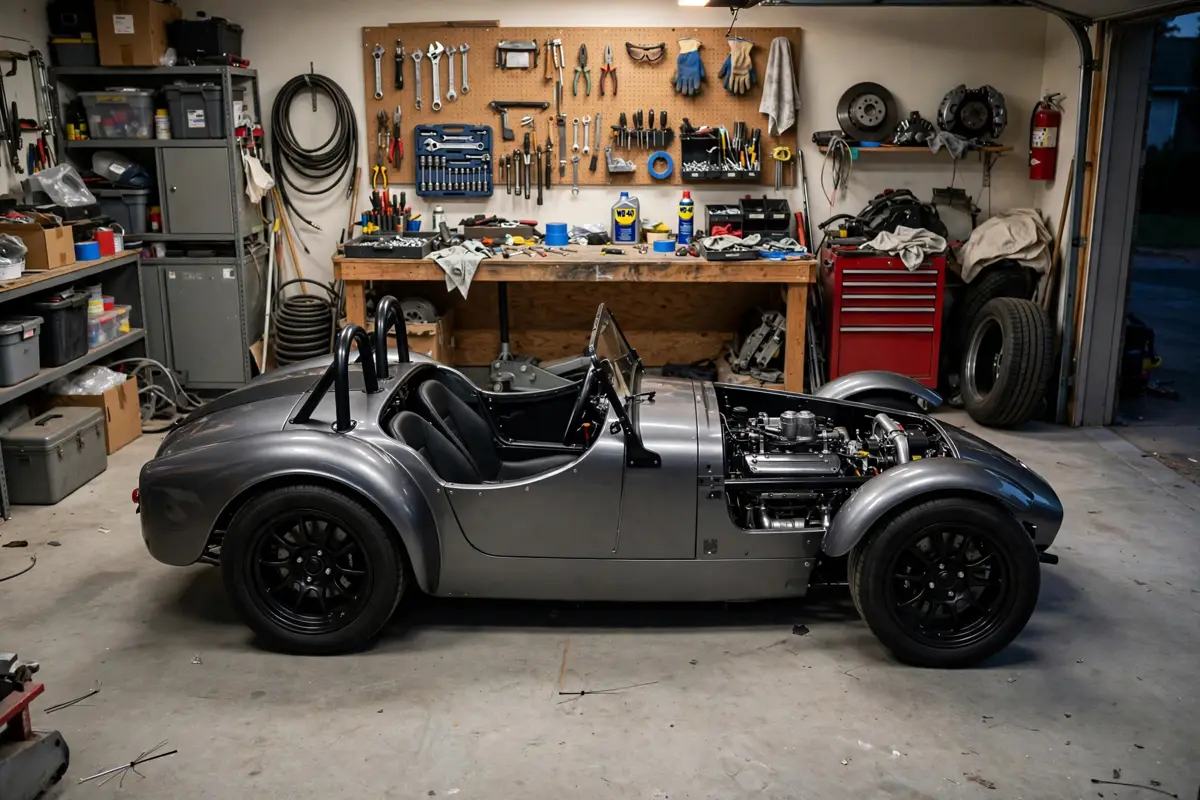
Kit car insurance is a specialist type of motor cover designed for cars that have been built, rather than bought, in finished form. If you have assembled a vehicle from a kit, or you are part-way through a self-build project, a standard car policy will usually not fit what you own. The car may have a different chassis, an engine from another model, a bespoke body and a value that reflects hundreds of hours of work rather than a showroom price. That is why kit car insurance exists: it covers the vehicle for what it actually is, and it can protect you during the build as well as once the car is on the road.
This guide explains how kit car insurance works in the UK, what to look for in a policy, and how the process differs from insuring an ordinary production car.
What Counts as a Kit Car?
A kit car is a vehicle built from a kit of parts, usually around a new chassis supplied by the kit manufacturer, with mechanical parts that may come from a donor vehicle. Some builders follow the kit closely, while others adapt it heavily, changing the engine, suspension or bodywork. The result is often described as a self build car insurance case, because no two finished cars are exactly alike.
Kit cars range from faithful replicas of classic roadsters to completely original designs. Some are built for weekend driving, some for shows, and some for occasional track use. What they share is that the finished vehicle cannot be valued by looking up a standard model in a price guide. Its value comes from the cost of the kit, the donor parts, any new components, and the labour that went into building it. A specialist insurer understands that, and will usually agree the car’s value with you in advance rather than settling a claim on a generic market figure.
It is also worth understanding that a kit car is not the same as a modified production car. A modified car starts life as a complete vehicle and is then changed. A kit car starts as parts. That distinction matters to insurers, because it affects how the vehicle is registered, how it is identified, and which policy wording applies. If you are unsure which category your car falls into, ask a specialist broker before you buy cover, and read the policy definition of the insured vehicle carefully.
Cover While You Are Still Building
Many self-build projects take months or even years, and the car needs protection long before it turns a wheel on the road. Build-up cover is designed for this stage. It can protect the kit and its parts against fire and theft while they are stored at home or in a workshop, and it can cover parts in transit when they are delivered. Some policies also cover tools and components kept with the project, although limits and conditions vary, so check what is included.
Keeping a clear record of spending during the build is one of the most useful things you can do. Invoices for the kit, the engine, the gearbox, wheels, tyres and any specialist work all help to establish the value of the finished car. Photographs taken at each stage of the build are equally valuable. They show the condition of the car, the quality of the work, and the parts used, which makes agreeing a value far simpler later on. If your policy includes agreed value, that evidence is what supports the figure.
Storage matters too. Insurers will usually ask where the car and its parts are kept, and what security is in place. A locked garage is the usual expectation, and additional security such as an alarm or immobiliser can help. Be honest about storage arrangements when you apply, because a claim can be affected if the car was kept somewhere different from what was declared.
Getting the Car on the Road
Before a kit car can be driven legally, it must pass an Individual Vehicle Approval (IVA) test, unless it qualifies for an exemption. The IVA checks that the vehicle meets safety and construction standards, covering areas such as brakes, lights, steering, seat belts and emissions. Preparing for the test is part of the build, and many kit manufacturers provide guidance on what examiners look for.
Once the car passes, it can be registered, and registration is the point at which road cover becomes essential. Remember that it is a legal requirement to insure a vehicle that is used or kept on a public road, unless it is formally declared off the road. Our guide to when your vehicle must have insurance explains the rules in more detail. For a kit car, the practical point is simple: do not drive it, even for a short test run on a public road, until road cover is in place.
The first year of cover for a new kit car often involves more questions than a renewal. The insurer may ask for the IVA pass certificate, photographs of the finished car, and details of the engine and chassis numbers. Having those documents ready makes the process quicker, and it helps the insurer set an agreed value that reflects the finished vehicle rather than the sum of its parts.
What a Specialist Kit Car Policy Typically Includes
Specialist policies for kit cars usually start from comprehensive cover and then add features that matter to builders and owners. Agreed value is the most important of these. Instead of a market value decided at claim time, you and the insurer agree a figure when the policy starts, based on the build cost and evidence you provide. That gives certainty if the car is written off or stolen.
Laid-up cover is another common feature. Many kit cars spend winter months in the garage, and laid-up cover protects against fire and theft while the car is not in use, without paying for road risks you do not need. Limited mileage options are also common, since kit cars are often second cars used for shows and weekend drives rather than daily commuting. If your mileage is genuinely low, a limited mileage policy can reflect that use.
Some policies also cover driving other cars, track day use, or European touring, but these are not automatic. Track use in particular is often excluded unless it is specifically added, so check the wording if you plan to take the car on a circuit. The same applies to modifications made after the policy starts: tell your insurer about significant changes, because they can affect cover.
When you are comparing specialist cover, it helps to understand the wider market first. Our guide to the best specialist car insurance explains how specialist providers differ from mainstream insurers, and our guide to what affects specialist car insurance cost covers the factors insurers weigh up. For high-value builds, the principles in our luxury car insurance guide are also relevant, since agreed value and careful valuation matter there too.
How to Compare Kit Car Insurance
Start by being precise about the car. Note the kit manufacturer and model, the donor vehicle if one was used, the engine size and type, the year of completion, and the agreed value you are seeking. Then decide how you will use the car: estimated annual mileage, whether it will be garaged, whether it will be used for shows or touring, and whether anyone else will drive it. Those answers shape the quotes you receive.
Compare policies on cover, not just on the headline figure. Check whether agreed value is included or optional, whether laid-up cover is available, what the excess is, and whether there are restrictions on drivers or use. A cheaper policy that excludes the cover you need is not a saving. It is also worth asking about claims handling for specialist vehicles, since repairing a kit car often means sourcing parts from the kit manufacturer rather than a mainstream parts network.
Understanding the basics of cover levels helps here. If you are unsure what comprehensive means in practice, our guide to fully comprehensive car insurance explains it clearly. And if you are wondering why one quote differs sharply from another, our guide to why car insurance is so expensive in the UK covers the rating factors that apply across the market, including driver history, location, and vehicle type.
Finally, keep your records up to date. If you upgrade the engine, change the wheels, or add a significant modification, tell your insurer. If the car’s value rises because of further work, ask for the agreed value to be reviewed at renewal. A policy that matches the car as it is today is the one that will respond properly if you ever need to claim.
Frequently Asked Questions
Can I insure a kit car while it is still being built? Yes. Build-up cover is designed for the construction stage and can protect the kit and parts against fire and theft before the car is registered.
Do I need an IVA test before insuring? You need an IVA pass before the car can be registered and driven on the road, and road cover must be in place before you drive it. Laid-up or build-up cover can apply before that stage.
What is agreed value? It is a value agreed between you and the insurer when the policy starts, based on build cost and evidence, rather than a market value decided after a claim.
Can I drive my kit car abroad? Some specialist policies include European cover, but the duration and countries covered vary, so check the wording before travelling.
Is a home built car harder to insure than a production car? It needs a specialist policy, but the process is straightforward once you have the build documented, the IVA passed, and an agreed value in place. The key is choosing an insurer that understands custom built car insurance rather than forcing the car into a standard category.
