

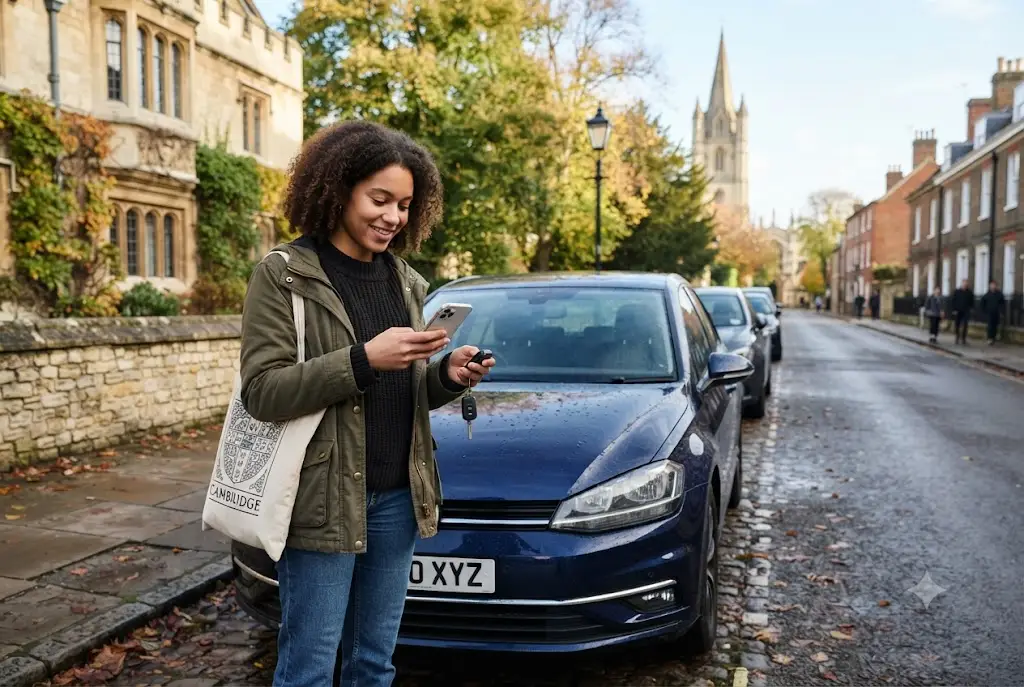
Temporary student car insurance can be a useful option when you only need to drive for a limited period. Students may need a car for a university holiday, a short trip home, borrowing a family member’s vehicle, moving between accommodation or covering a temporary gap between longer-term insurance arrangements. Instead of committing immediately to an annual policy, short-term cover can provide insurance for a defined period.
However, temporary cover is not automatically the cheapest choice. The cost can depend on your age, driving experience, location, vehicle, mileage and length of cover. Before buying a policy, it is important to understand what temporary insurance covers, when it makes sense and which alternatives may be more appropriate.
What Is Temporary Student Car Insurance?
Temporary student car insurance is short-term motor insurance designed to cover a driver for a specified period rather than an entire annual policy term. Temporary car insurance can be available for periods ranging from very short durations to several weeks, depending on the insurer and policy.
MoneyHelper describes temporary car insurance as short-term cover that can typically last from around one hour to 28 days, although the exact periods available depend on the provider. It can be useful for short trips, emergencies, borrowing a vehicle or other limited driving needs. :contentReference[oaicite:0]{index=0}
For students, this flexibility can be particularly useful because car usage often changes during the academic year. You may not need a vehicle throughout term time but could need one for a specific holiday or journey.
When Could Temporary Student Car Insurance Be Useful?
Temporary cover may be worth considering when your need for a car is clearly limited. The key is to match the insurance period to the actual period during which you need to drive.
Common situations include:
- Borrowing a parent’s or relative’s car for a few days.
- Using a vehicle during a university holiday.
- Taking a short road trip.
- Driving a car while visiting family.
- Covering a temporary gap between insurance arrangements.
- Using a car for a short period after moving accommodation.
- Sharing driving during a specific journey.
- Needing temporary cover before returning to university.
MoneyHelper specifically identifies borrowing or renting a car, emergencies and short trips as situations where temporary insurance may be useful. :contentReference[oaicite:1]{index=1}
How Does Temporary Student Car Insurance Work?
The basic process is straightforward. You provide the insurer with information about yourself, the vehicle and the period for which you require cover. If the insurer accepts the application, the policy provides cover for the agreed period and under the specified terms.
Once the temporary policy expires, you should not continue driving unless you have another valid insurance arrangement in place. UK law requires at least third-party insurance for driving a vehicle on public roads. GOV.UK confirms that you must have motor insurance to drive a vehicle on UK roads, with third-party insurance being the legal minimum. :contentReference[oaicite:2]{index=2}
This means a student should never assume that simply having access to an insured vehicle means they personally have permission to drive it. The policy must cover their use of that vehicle.
One Day Student Car Insurance
One day student car insurance can be useful when you only need to drive for a single day. For example, a student might borrow a parent’s car to travel home, attend an event or complete a particular journey.
Daily insurance can provide more flexibility than adding yourself to another person’s annual policy, depending on the circumstances. However, you should compare the total cost and check exactly what cover is included.
MoneyHelper notes that daily car insurance can be suitable for situations such as road trips or borrowing someone else’s vehicle. :contentReference[oaicite:3]{index=3}
Before buying one-day cover, check the policy start and end times. If your journey could run beyond the stated expiry time, make sure you have appropriate insurance for the entire period you are driving.
Short Term Student Car Insurance for a Few Days or Weeks
Short term student car insurance may be more appropriate when your driving requirement lasts longer than a single day but does not justify an annual policy.
For example, you might need a car for a two-week university holiday or while staying with family. A temporary policy can allow you to arrange cover for a defined period without immediately committing to twelve months of insurance.
However, temporary policies can become expensive if repeatedly extended. MoneyHelper notes that annual insurance can often provide better rates when a driver needs cover for a longer period, meaning short-term insurance should be compared against the total cost of alternatives rather than judged solely on flexibility. :contentReference[oaicite:4]{index=4}
Holiday Student Car Insurance
Holiday student car insurance is a common reason students investigate temporary cover. During university term time, you may have little need for a vehicle because you live close to campus or use public transport. During the holidays, however, you may return home and need access to a car.
Temporary insurance can potentially bridge that short period without requiring you to maintain an annual policy for a vehicle you rarely use. However, the most suitable arrangement depends on whether you own the car, regularly borrow it or are simply using it for occasional trips.
If the vehicle belongs to a parent or another family member, compare temporary cover with the possibility of being added to their policy. The cheaper option will depend on the individual driver, vehicle and insurer.
Is Temporary Car Insurance Cheaper for Students?
Not necessarily. Temporary student car insurance is designed primarily for flexibility rather than guaranteed savings.
MoneyHelper states that temporary insurance costs vary according to factors including age, job, location, driving history, vehicle make and model and mileage. Less experienced drivers and more expensive vehicles can cost more to insure. :contentReference[oaicite:5]{index=5}
For a student who needs cover for just one or a few days, paying for temporary insurance may be more economical than committing to an annual policy. On the other hand, if you need regular cover for many months, an annual policy may provide better value.
The best approach is therefore to calculate the total cost of each realistic option before deciding.
What Level of Cover Can You Get?
Temporary policies can offer different levels of motor insurance, although the options vary by provider.
Third-Party Cover
Third-party insurance is the minimum legal level of motor insurance required for driving on UK roads. It covers your liability for certain injury or damage caused to other people or their property, but does not normally cover damage to your own vehicle.
GOV.UK confirms that third-party insurance is the legal minimum for using a vehicle on UK roads. :contentReference[oaicite:6]{index=6}
Third-Party, Fire and Theft
This type of policy can provide third-party protection while adding cover for specified situations involving theft or fire, subject to the policy terms.
Comprehensive Cover
Comprehensive insurance generally provides wider protection, including cover for damage to the insured vehicle in certain circumstances. The precise protection depends on the policy, exclusions and excess.
MoneyHelper notes that temporary insurance providers may offer different levels of cover, so students should check the policy documents rather than assuming every short-term policy provides identical protection. :contentReference[oaicite:7]{index=7}
Can Students Get Temporary Insurance on Someone Else’s Car?
In some circumstances, temporary insurance can be used when a student needs to borrow another person’s vehicle. This can be useful if you are visiting home and need access to a family car for a few days.
However, eligibility depends on the insurer, the driver, the vehicle and other circumstances. You should confirm that the policy specifically covers you to drive that particular vehicle before starting your journey.
The vehicle owner’s existing insurance does not automatically mean that every person is insured to drive it. GOV.UK warns that even if a vehicle itself is insured, a driver can still be penalised if they are not correctly insured to drive it. :contentReference[oaicite:8]{index=8}
Always obtain permission from the vehicle owner and make sure the insurance arrangement is valid before driving.
Temporary Insurance vs Being a Named Driver
Students who regularly use a family vehicle may want to compare temporary insurance with becoming a named driver on the owner’s policy.
A named driver may be a practical option when the student uses the car regularly over a longer period. Temporary insurance, by contrast, may make more sense when the need is genuinely short and specific.
There is no universal winner because the cost depends on the individual circumstances. Ask the existing insurer for the cost of adding the student and compare that figure with appropriate temporary policies.
Importantly, the student must not be falsely presented as an occasional or named driver if they are actually the main driver. Insurance information must accurately reflect who normally uses the vehicle.
Temporary Insurance vs an Annual Policy
The biggest decision is often whether short-term cover or an annual policy makes more sense.
Temporary insurance may be suitable when:
- You need a car for a clearly defined short period.
- You are borrowing a vehicle temporarily.
- You only need cover during a university holiday.
- You do not normally drive during term time.
- You need temporary cover for a specific trip.
An annual policy may be more suitable when:
- You own and regularly use a car.
- You need consistent cover throughout the academic year.
- You drive to university or work regularly.
- You expect to use the car for many months.
- The overall cost of repeated temporary policies would be high.
MoneyHelper notes that temporary insurance can be cost-effective for short periods but may become more expensive than annual insurance if you continue extending it. :contentReference[oaicite:9]{index=9}
Does Temporary Insurance Build a No-Claims Bonus?
One important difference between temporary and annual insurance is the treatment of a no-claims bonus.
Temporary car insurance does not normally provide the same opportunity to build a traditional annual no-claims bonus. MoneyHelper specifically identifies the lack of a no-claims bonus as one potential disadvantage of temporary insurance. :contentReference[oaicite:10]{index=10}
For a student who only needs cover for a few days, this may not matter. However, someone who expects to rely on car insurance for several years should consider how their insurance history may develop over time.
What Should Students Check Before Buying Temporary Cover?
A low price should not be the only deciding factor. Before purchasing temporary student car insurance, review the policy carefully.
Check:
- The exact start and expiry time.
- The vehicle registration and details.
- The level of cover.
- The compulsory and voluntary excess.
- The permitted use of the vehicle.
- Any mileage restrictions.
- Driver eligibility requirements.
- Exclusions relating to modifications or vehicle use.
- Whether driving abroad is included.
- Cancellation rules.
- Whether extensions are available.
MoneyHelper also recommends checking policy details because temporary insurance may not cover certain circumstances such as mechanical breakdown, wear and tear or commercial use. :contentReference[oaicite:11]{index=11}
How Students Can Keep Temporary Insurance Costs Under Control
Although temporary insurance is short-term by design, students can still take sensible steps to avoid unnecessary costs.
First, choose the shortest realistic period that covers your intended driving. Do not select a longer period simply for convenience unless you know you will need it.
Second, compare multiple providers where possible. Prices can vary depending on the insurer’s assessment of your age, driving experience, vehicle and location.
Third, compare temporary cover with alternatives such as being added as a named driver or arranging an annual policy. The cheapest solution depends on how often you drive and for how long.
Finally, provide accurate information. A cheaper quote based on incorrect details is not a genuine saving and could cause serious problems if you need to claim.
What If You Need to Drive Without Insurance?
Students should never treat temporary insurance as optional simply because the journey is short. UK law requires appropriate motor insurance when driving on public roads.
GOV.UK states that driving without at least third-party insurance is illegal. Drivers caught without the required insurance can face a fixed penalty of £300 and six penalty points, with more serious consequences possible if a case goes to court. :contentReference[oaicite:12]{index=12}
The important point is that the length of the journey does not remove the insurance requirement. A five-minute trip can still require valid insurance just like a longer journey.
Temporary Student Car Insurance for University Holidays
University holidays can create unusual insurance needs. A student may spend most of the term without a car but suddenly need one for several weeks during the summer or winter break.
Before arranging temporary cover, consider how frequently you will actually drive. If you will drive every day for several weeks, compare the total cost with other insurance arrangements. If you only need the car for a handful of days, short-term cover may be more practical.
Students who regularly keep a vehicle while studying can also explore car insurance while at university to understand how accommodation, term-time driving and location can affect their longer-term insurance needs.
Similarly, if your primary concern is keeping the cost of student motoring under control, our guide on how to save on student car insurance covers vehicle choice, mileage, telematics and other cost-saving considerations.
Temporary Student Car Insurance Checklist
Before purchasing a short-term policy, use this checklist:
- Confirm that you are legally entitled to drive in the UK.
- Confirm that the insurer covers your age and driving history.
- Check that the exact vehicle is eligible.
- Choose a realistic insurance period.
- Check the start and expiry times.
- Compare the full cost with alternative options.
- Check the level of cover.
- Review the excess.
- Read exclusions and restrictions.
- Confirm the permitted use of the vehicle.
- Check whether overseas travel is covered if relevant.
- Make sure the policy is active before you drive.
Final Thoughts on Temporary Student Car Insurance
Temporary student car insurance can be a practical solution when your need for a vehicle is short, specific and clearly defined. One-day cover may work for a single journey, while short-term insurance can be useful for a holiday or several weeks of driving.
However, flexibility does not always mean lower cost. Students should compare temporary cover against annual insurance and other legitimate alternatives before making a decision. Consider the length of time you need the car, how frequently you will drive and whether building a longer-term insurance history matters to you.
Most importantly, make sure you are correctly insured for every journey. UK law requires appropriate motor insurance, even for short trips. By comparing policies carefully, checking the terms and choosing cover that genuinely matches your circumstances, you can make a more informed decision about short-term student driving.
