

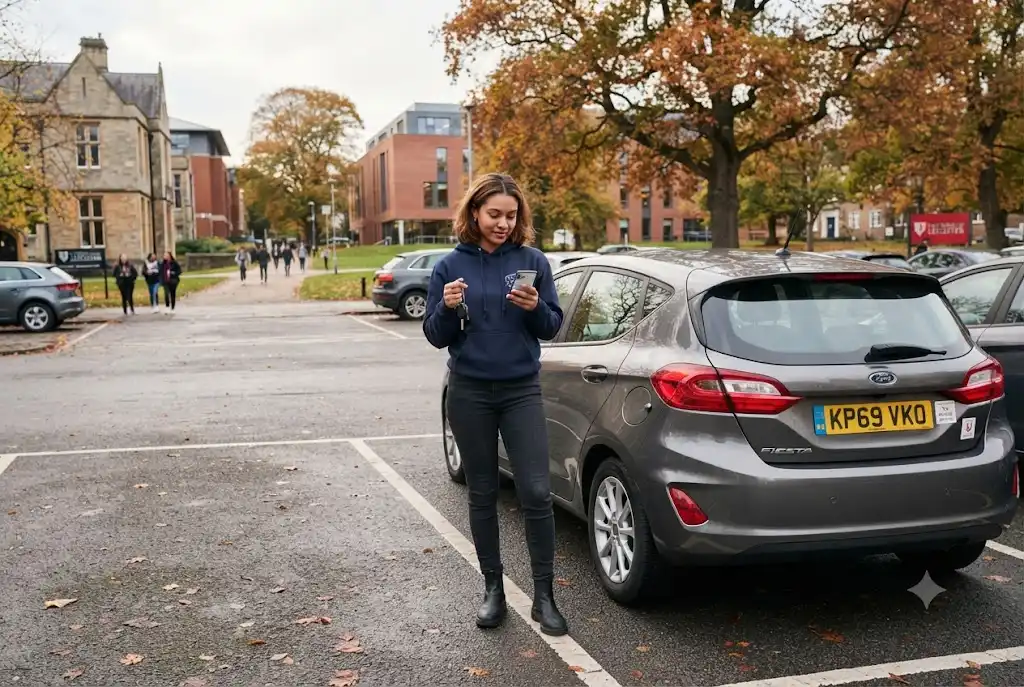
Learning how to save on student car insurance can make a significant difference to the overall cost of owning and running a car while studying. Students and young drivers can face higher premiums because insurers generally consider age, driving experience, vehicle type, location and claims history when calculating risk. However, there are several practical ways to reduce student insurance costs without choosing inadequate cover.
From selecting a sensible car and comparing quotes to considering telematics and reviewing your annual mileage, small decisions can have a meaningful effect on your premium. This guide explains practical ways to lower student car insurance while keeping your policy suitable for your circumstances.
Why Is Student Car Insurance Often Expensive?
Student car insurance can be expensive because many students are also young or inexperienced drivers. Insurers use a range of risk factors when calculating premiums, including age, driving history, vehicle characteristics, where the car is kept and the likelihood and cost of claims.
The Association of British Insurers explains that younger drivers tend to face higher insurance costs because they are statistically more likely to be involved in accidents and make claims. :contentReference[oaicite:0]{index=0}
That does not mean students have to accept the first expensive quote they receive. Comparing suitable policies and making sensible choices about the car and cover can help bring costs under control.
How to Save on Student Car Insurance
1. Choose a Car That Is Cheaper to Insure
The car you drive can have a major influence on your insurance premium. Before buying a vehicle, investigate its insurance group and consider how its engine size, performance, repair costs and value could affect the price of cover.
A small, practical car with modest performance may be more affordable to insure than a powerful or expensive model. For students working with a limited budget, the cheapest car to buy is not necessarily the cheapest car to own.
Before committing to a vehicle, obtain insurance quotes for the exact make, model and specification. This can prevent an unexpected insurance bill after you have already purchased the car.
2. Compare Student Insurance Quotes
One of the simplest ways to reduce student insurance costs is to compare different policies rather than automatically renewing or accepting the first quote available.
Prices can vary between insurers because each company assesses risk differently. The ABI recommends shopping around and checking both comparison sites and insurers that sell policies directly. :contentReference[oaicite:1]{index=1}
When comparing policies, look beyond the headline price. Check the level of cover, compulsory and voluntary excesses, mileage limits, exclusions, courtesy-car arrangements and any additional features included in the policy.
If you are unsure which type of cover fits your circumstances, researching the best student car insurance options can help you understand what to compare before making a decision.
3. Consider Telematics or Black Box Insurance
Telematics insurance can be worth considering if you are a student who wants to demonstrate safe driving. A telematics policy uses a device or app to monitor aspects of driving, which can include factors such as speed, braking and mileage, depending on the insurer and policy.
Some insurers may offer lower premiums or rewards where telematics data indicates safer driving. The ABI notes that these policies can help some young drivers reduce costs, although the exact terms and monitoring requirements vary between policies. :contentReference[oaicite:2]{index=2}
However, a black box policy is not automatically cheaper for every student. Check how the insurer assesses driving, whether there are restrictions and what happens if you exceed permitted mileage or breach policy conditions.
4. Be Accurate About Your Mileage
When obtaining a quote, give an accurate estimate of how many miles you expect to drive. Students who only use their cars occasionally may not need the same level of annual mileage as someone who commutes every day.
Do not deliberately underestimate your mileage to obtain a cheaper quote. If your actual usage is significantly different from what you declared, it could create problems when making a claim.
If you mainly use your car during weekends, holidays or occasional trips home, investigate whether a low-mileage or pay-as-you-drive option could be suitable. MoneyHelper notes that pay-as-you-go insurance can be useful for some low-mileage drivers, although the overall cost depends on factors such as driving frequency, age, vehicle and location. :contentReference[oaicite:3]{index=3}
5. Think Carefully About Your Voluntary Excess
Your excess is the amount you may have to contribute towards a claim. Increasing your voluntary excess can sometimes reduce the premium, but it should only be done if you could comfortably afford that amount following an incident.
Remember that a policy can include both a compulsory excess and a voluntary excess. These may be payable together when a claim is made.
For a student on a tight budget, choosing an excessively high voluntary excess simply to obtain a lower premium may not be sensible. Look for a balance between the upfront insurance cost and the amount you could realistically pay after an accident.
6. Build a Clean Driving Record
Safe driving is one of the most useful long-term ways to lower student car insurance. Avoiding accidents, convictions and penalty points can help you develop a stronger driving history.
Over time, claims-free driving can also help you build a no-claims discount. MoneyHelper explains that a no-claims bonus rewards drivers who go through a policy year without making a claim, although the exact discount and rules vary between insurers. :contentReference[oaicite:4]{index=4}
For students, this means that saving money is not only about finding a cheaper policy today. Building a responsible driving record can also support lower insurance costs in future years.
7. Improve Vehicle Security
Security measures may also help when looking for ways to lower student car insurance. Depending on the insurer and vehicle, features such as an approved immobiliser, alarm or secure parking may affect the risk assessment.
Where possible, keeping the car in a secure garage or suitable off-road parking area may also be preferable to leaving it exposed on a public road. However, always tell the insurer where the car is actually kept overnight rather than selecting an option simply because it produces a lower quote.
The ABI identifies vehicle security and where a car is stored at night among the factors that can influence insurance pricing. :contentReference[oaicite:5]{index=5}
8. Avoid Unnecessary Car Modifications
Modifications can make a car more expensive to insure. Performance upgrades, cosmetic changes and other alterations may affect how an insurer assesses the vehicle.
If you modify your car, tell your insurer and check whether the change is covered. Failing to disclose relevant modifications can create problems with your policy.
For students trying to keep premiums under control, a standard, practical vehicle may be easier to insure than a heavily modified car.
9. Consider the Timing of Your Insurance Purchase
The timing of your insurance purchase can also matter. Rather than leaving your renewal or new policy arrangements until the last minute, give yourself enough time to compare suitable quotes and review the terms.
MoneyHelper advises that buying car insurance several weeks before the policy starts can often be cheaper than arranging cover at the last minute. :contentReference[oaicite:6]{index=6}
Students moving between university and home should also pay attention to policy dates. If your circumstances change during the academic year, contact your insurer and make sure the information on your policy remains accurate.
10. Check Whether You Actually Need Every Extra
Optional extras can increase the total price of a policy. Depending on your circumstances, you may be offered features such as breakdown assistance, legal expenses cover or other additional benefits.
Do not automatically select every extra simply because it is presented during the quote process. Instead, check what protection you genuinely need and whether you already have similar cover elsewhere.
MoneyHelper recommends checking existing financial products and policies before paying for duplicate features. :contentReference[oaicite:7]{index=7}
Student Insurance Discounts: What Should You Check?
Students often search for specific student insurance discounts, but there is no universal discount that every student will receive simply because they attend university. Insurance pricing depends on the individual risk profile and the terms offered by each insurer.
Instead of focusing only on a label such as “student discount”, look for features that could genuinely make a policy more suitable or affordable. Telematics, lower mileage, a suitable vehicle, secure parking and a clean driving history may all be relevant depending on the insurer.
It is also worth checking whether your circumstances change when you return home during university holidays. Your regular location, mileage and vehicle use should accurately reflect how you actually drive.
Be Careful When Adding a Named Driver
Adding an experienced driver to a policy can sometimes reduce the premium, but the arrangement must accurately reflect who uses the vehicle most.
You should never list a parent, relative or another experienced motorist as the main driver if the student is actually the person who uses the car most. This practice, known as fronting, is insurance fraud and can result in serious consequences, including problems with a claim and future insurance costs. :contentReference[oaicite:8]{index=8}
If another person genuinely uses the vehicle and the policy allows them to be included, provide accurate information to the insurer. The goal should always be to find legitimate ways to lower student car insurance rather than manipulating the details of a quote.
What Is the Best Way to Lower Student Car Insurance?
There is no single solution that guarantees the cheapest premium for every student. The most effective approach is usually to combine several sensible decisions.
- Choose a car that is affordable to insure.
- Compare quotes from multiple suitable providers.
- Consider telematics if it fits your driving habits.
- Give accurate annual mileage information.
- Choose a voluntary excess you can genuinely afford.
- Drive safely and protect your no-claims record.
- Use appropriate vehicle security.
- Avoid unnecessary modifications.
- Review optional extras carefully.
- Keep every detail on your policy accurate and up to date.
These steps can make a difference, but price should not be the only consideration. A policy that costs slightly more but provides the cover you actually need may be better value than an apparently cheap policy with restrictive terms.
Student Car Insurance Advice Before You Buy
Before purchasing cover, take a few minutes to review the complete policy rather than relying only on the quoted premium. Check the type of cover, excess, mileage allowance, exclusions, driving restrictions and any telematics requirements.
Students should also think ahead about how their car will be used during term time, weekends and university holidays. If your circumstances are likely to change, make sure you understand when you need to tell the insurer.
If you are studying in the UK but normally live abroad, your insurance requirements may be different. In that situation, it is useful to explore international student car insurance and understand the requirements that may apply to overseas students and different driving licences.
Likewise, students who only need a vehicle for a limited period may want to investigate temporary student car insurance rather than automatically taking a standard annual policy.
Final Thoughts on Saving on Student Car Insurance
Learning how to save on student car insurance is largely about making informed choices rather than searching for one special discount. The car you choose, your driving record, mileage, parking arrangements, policy options and the insurer you select can all influence the final price.
Start comparing early, provide accurate information and assess the quality of cover alongside the premium. Most importantly, avoid shortcuts such as inaccurate driver details or mileage declarations. A legitimate saving is one that reduces your costs while keeping your insurance valid and appropriate for the way you actually use your car.
With careful comparison and sensible decisions, students can find more manageable insurance costs while building a strong foundation for cheaper and more suitable motoring in the future.
