

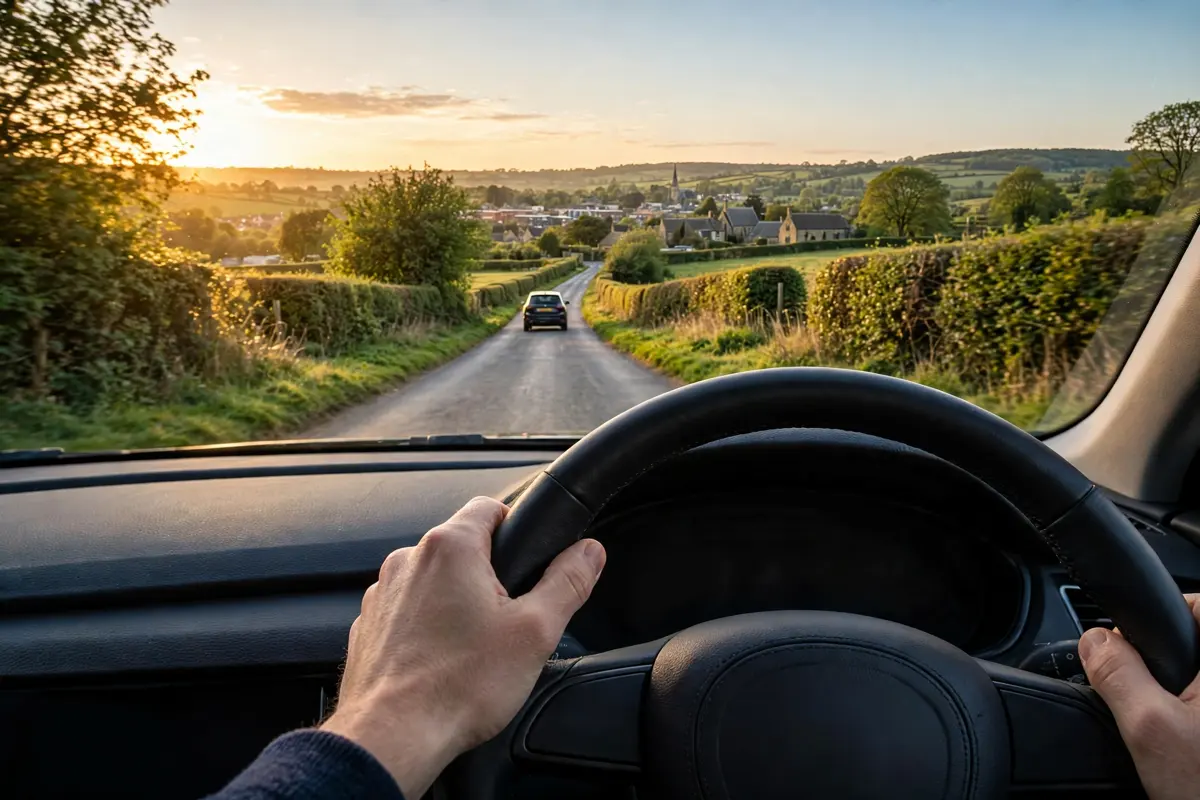
Most collisions on UK roads are not caused by dramatic failures. They happen because someone was following too closely, glanced at a phone, or simply did not see a hazard until it was too late. Defensive driving is the habit of expecting those mistakes, your own and everyone else’s, and leaving yourself the time and space to deal with them. These defensive driving tips are not advanced techniques reserved for professionals; they are simple habits any driver can build, and they pay off twice: first in safety, and second in a cleaner driving record that helps protect your insurance costs.
What Is Defensive Driving?
Defensive driving means driving to prevent collisions despite the conditions around you and the actions of others. Instead of assuming the car ahead will brake gently, the van at the junction has seen you, or the pedestrian will wait for the crossing, you plan for the possibility that they will not. It is a mindset of observation, anticipation and patience, and it matters on every kind of road, from a quiet residential street to the M25 in rush hour.
Defensive Driving Tips for Everyday UK Roads
Keep a safe following distance
The two-second rule is the foundation of defensive driving. Pick a fixed point, such as a sign or a bridge, and when the vehicle in front passes it, you should be able to count two full seconds before you pass the same point. In wet weather, double it to at least four seconds, because stopping distances grow quickly on slick surfaces. That gap is your thinking time, and it is what turns a sudden brake ahead into a non-event instead of a claim.
Look well ahead, not just at the car in front
Scan the road as far ahead as you can see, then check your mirrors regularly, so you build a picture of what is developing around you. A brake light half a dozen cars ahead, a bus indicating to pull out, or a cyclist approaching a parked car are all early warnings if you are looking for them. Good observation is also what helps at junctions and roundabouts: assume the waiting driver may pull out, cover the brake, and make sure they have actually seen you before you commit.
Manage your speed for the conditions
The speed limit is a maximum, not a target. Defensive drivers slow down early for bends, built-up areas, poor visibility and wet or icy roads, and they are especially careful around schools, parked cars and side streets where children or animals can appear without warning. Arriving two minutes later is always cheaper than a collision, in every sense.
Remove distractions and plan for fatigue
Using a handheld phone while driving is illegal in the UK and, just as importantly, it destroys the observation that defensive driving depends on. Set your sat nav before you move off, keep music and calls hands-free and minimal, and if a message matters, stop somewhere safe to read it. Tiredness has the same effect as distraction, so on long journeys plan a break of at least fifteen minutes every two hours, and never push on when you feel drowsy.
Defensive Driving on Motorways and Dual Carriageways
High-speed roads reward the same habits, applied earlier. Join at a speed that matches the traffic, keep left unless overtaking, and plan lane changes well in advance with mirror, signal, manoeuvre in that order. Watch for vehicles slowing suddenly ahead, and be particularly careful around slip roads, where joining and leaving traffic crosses paths. If you pass a lorry, remember its blind spots are large: if you cannot see the driver’s mirrors, the driver probably cannot see you. And if your car develops a problem, leave at the next exit or use an emergency area or hard shoulder as a last resort, get everyone out on the verge side, and move behind the barrier before calling for help.
Night driving deserves a mention too. Slow down so you can always stop within the distance you can see clearly on dipped headlights, keep your windscreen clean inside and out to cut glare, and look slightly away from oncoming headlights if they dazzle you. Rural roads at night hide bends, animals and unlit cyclists, so treat every dark stretch as if something is around the next corner, because one day there will be.
Defensive Driving in Bad Weather
British weather makes defensive habits essential rather than optional. In heavy rain, slow down, extend your following distance, and use dipped headlights so others can see you; be ready for standing water, which can pull the car sideways or hide a pothole. In fog, reduce speed well before you reach it, use fog lights when visibility is seriously reduced, and switch them off when it clears so you do not dazzle drivers behind. Ice and frost demand the gentlest inputs of all: accelerate, brake and steer smoothly, and leave far more space than feels necessary. If conditions are truly severe, the most defensive decision is not to drive at all.
How Defensive Driving Protects Your Insurance Costs
Insurers price risk, and a driver who avoids collisions avoids the claims, penalty points and lost discounts that push premiums up. Every claim-free year builds the discount explained in our guide to the no claims bonus, and losing it after one avoidable bump can cost far more than the repair itself. If the worst does happen, knowing the process in our guide on how to make a car insurance claim helps you deal with it properly. Put simply, the habits that keep you safe are the same habits that keep your record clean and your renewal quote down.
Building the Habit, Especially for Newer Drivers
You do not need a course to start, although advanced driving courses exist for those who want structured coaching. Begin with one habit at a time: the two-second gap this week, mirror checks the next, and a strict no-phone rule from today. Newer drivers benefit most of all, because the first years on the road set patterns that last. If you are helping a young driver get started, our guide to the best cars to insure for young drivers and our student car insurance guide show how the right car and cover work alongside safer habits to keep costs manageable.
Defensive driving is not about being slow or nervous; it is about being observant, patient and ready for other people’s mistakes. Build these defensive driving tips into your everyday driving and you will arrive calmer, keep your passengers safer, and give your insurance record the best protection there is: never needing to use it.
