

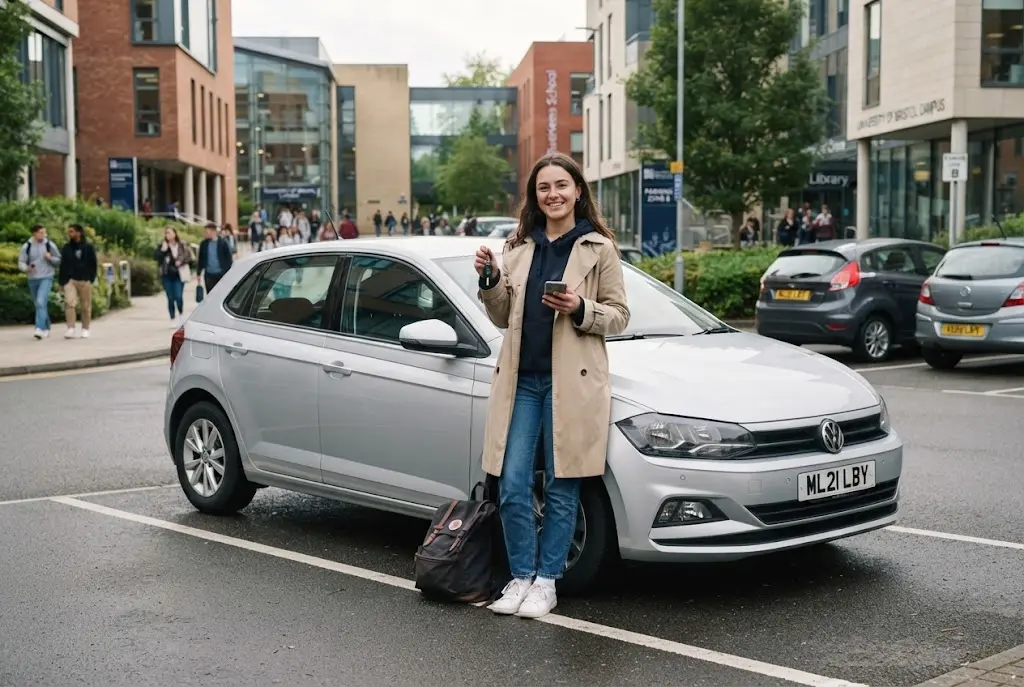
Student car insurance can be an important consideration for university and college students who need a car for commuting, travelling home, attending placements or managing everyday life. For younger drivers, however, finding suitable cover can be more complicated because insurers consider factors such as age, driving experience, vehicle, location and intended use when assessing risk.
Whether you are a new driver heading to university, an existing driver moving away from home or a student who only needs occasional access to a car, understanding your insurance options can help you compare policies more effectively. The right policy depends on your circumstances rather than simply whether you are a student.
What Is Student Car Insurance?
Student car insurance generally refers to car insurance purchased by someone studying at a university, college or other educational institution. It is not necessarily a separate type of motor insurance with one standard set of terms. Instead, students normally compare conventional motor insurance policies based on their age, driving history, vehicle and intended use.
This distinction matters because two students can have very different insurance needs. A 19-year-old newly qualified driver who owns a small hatchback may need a different policy from a 24-year-old student with several years of driving experience. Similarly, a student who drives every day will have different requirements from someone who only uses a car during holidays.
Insurance providers set their own eligibility criteria and pricing models, so students should provide accurate information when requesting quotations.
Why Can Car Insurance Be Expensive for Students?
Many students are young or relatively inexperienced drivers, and these characteristics can affect insurance pricing. The Association of British Insurers explains that motor insurance premiums reflect the risk represented by the driver, with factors including age, driving history, location, vehicle and mileage influencing the calculation.
This means being enrolled at university does not automatically make insurance cheaper. A student discount may exist with a particular provider, but it should not be assumed that every insurer offers one.
Your circumstances can also change when you move away from home. For example, the address where the vehicle is normally kept may affect the quotation. If you move to a university town or city, make sure your insurer has accurate information about where the car is kept and how it is used.
Student Car Insurance UK: What Information Do Insurers Need?
When comparing student car insurance UK policies, you will generally need to provide information about yourself, your vehicle and your driving requirements.
Important details can include:
- Your age and date of birth.
- Your driving licence and experience.
- Your driving and claims history.
- Your home and regular parking address.
- The make, model and specification of the car.
- Your estimated annual mileage.
- How you use the vehicle.
- Where the vehicle is normally kept overnight.
- Any additional drivers.
The information needs to be accurate. If your circumstances change after a policy starts, contact the insurer to establish whether the change needs to be recorded.
Car Insurance for Students: Choosing the Right Level of Cover
Students can normally compare different levels of motor insurance, depending on what insurers offer and the circumstances of the driver.
Third-party insurance provides the minimum level of cover required for driving on UK roads. Third-party, fire and theft can provide additional protection in certain circumstances, while comprehensive insurance generally offers broader protection for the insured vehicle and driver, subject to the policy terms and exclusions.
The cheapest headline quotation is not necessarily the most suitable option. Compare what each policy actually covers, including excesses, exclusions, optional extras and usage restrictions.
The Highway Code states that vehicles used on roads must have valid insurance covering at least third-party liability, and drivers must make sure that their insurance is appropriate for their use of the vehicle.
Cheap Student Car Insurance: What Can Help?
Students searching for cheap student car insurance should focus on reducing unnecessary risk and comparing policies rather than looking only for the lowest advertised price.
Several factors may influence the quotation. Vehicle choice is particularly important. A smaller, less powerful car may be less expensive to insure than a higher-performance model, although the actual premium depends on the insurer and the individual circumstances.
Accurate mileage estimates can also matter. Do not deliberately underestimate your mileage simply to obtain a lower quotation. Instead, provide a realistic estimate based on how you expect to use the vehicle.
You can also compare different excess options, but remember that a higher voluntary excess means you may have to contribute more towards a claim. Consider whether the excess would be affordable if you needed to make a claim.
Car Insurance Student Discounts: Do They Exist?
Some insurers or insurance-related schemes may offer discounts or pricing arrangements for particular customer groups, but there is no universal car insurance student discount that every student automatically receives.
Instead of searching only for a student-specific discount, compare the full quotation and policy terms. A provider advertising a student discount may not necessarily produce the lowest overall price for your circumstances.
It is also worth checking whether you qualify for other potential savings offered by insurers. For example, some providers offer telematics policies that use driving data to assess individual driving behaviour. The ABI notes that telematics can provide personalised pricing and may potentially help safer drivers obtain lower premiums, although suitability varies between drivers.
Student Car Insurance for New Drivers
Students who have recently passed their driving test may face different insurance considerations from those who have been driving for several years.
New drivers have limited driving history, which can affect how insurers assess risk. If you have recently passed your test, compare quotations using accurate information about your licence and driving experience rather than relying on assumptions about what your premium should cost.
If you are still learning to drive, you need appropriate learner-driver insurance. GOV.UK explains that learners practising in someone else’s car must either be covered by the vehicle owner’s insurance as a learner or have their own policy covering them as a learner driver.
Once you pass your test, you must have an insurance policy that allows you to drive without supervision.
Student Car Insurance When Moving to University
Moving to university can change the way you use and store your vehicle. You may suddenly drive fewer miles, park in a different location or use the car mainly for trips home rather than daily commuting.
These changes should be discussed with your insurer. Your regular address and where the car is kept can be relevant to insurance pricing, so using an old address simply because it produces a cheaper quotation can create problems.
Before moving, check your policy conditions and contact your insurer if your address, parking arrangements, mileage or usage will change.
Can Students Stay on Their Parents’ Car Insurance?
In some circumstances, a student may be able to remain connected to a parent’s insurance arrangements, but the precise arrangement depends on the policy and who actually drives the vehicle.
If a student regularly uses a car, the insurer needs accurate information about that usage. A parent should not describe themselves as the main driver when the student is actually the main user simply to reduce the premium. This practice is commonly referred to as fronting and can create serious insurance problems.
The ABI warns that fronting can result in a policy being invalidated and can leave customers responsible for costs arising from a claim.
If you are unsure whether you should be a named driver, main driver or policyholder, explain the actual circumstances to the insurer before purchasing cover.
Student Insurance for Cars Used During University Holidays
Not every student needs a car throughout the entire academic year. Some students leave their car at home while studying and only drive during holidays or occasional visits.
If this applies to you, compare your available insurance options before making assumptions about what will be cheapest. Depending on your circumstances, an annual policy, temporary cover or another legitimate arrangement may be worth investigating.
For students who only need a car for short periods, temporary car insurance for young drivers may be another topic worth considering. The suitability of short-term cover depends on the driver’s age, vehicle and intended use.
Can Pass Plus Reduce Student Car Insurance Costs?
Pass Plus is a practical training course designed to help drivers improve their skills. GOV.UK says the course takes at least six hours and may be particularly useful for new drivers during the first year after passing their test.
Completing Pass Plus may also qualify you for an insurance discount with some providers. However, GOV.UK confirms that not all insurers offer a Pass Plus discount and the amount of any discount depends on the insurance company.
Therefore, students should not automatically assume that completing the course will reduce their premium. Check with insurers when comparing quotations.
How to Compare Car Insurance for Students
A structured comparison can make it easier to understand which policy fits your circumstances.
- Confirm your details: Make sure your age, licence, address and driving history are accurate.
- Choose the right vehicle information: Enter the exact make, model and specification.
- Estimate realistic mileage: Consider university travel, commuting, social trips and journeys home.
- Check your usage: Make sure the policy permits the type of driving you intend to do.
- Compare cover: Look at the policy wording, exclusions, excess and benefits.
- Review optional extras: Decide whether extras such as breakdown assistance are actually useful to you.
- Check eligibility: Make sure the insurer accepts your age, licence type and circumstances.
This approach is more useful than simply searching for the phrase “best student car insurance” and selecting a policy based on its headline price.
Student Car Insurance and the Right Vehicle
The car you choose can have a significant influence on your insurance quotation. Students who have not yet purchased a vehicle should consider insurance costs alongside purchase price, fuel consumption, maintenance and other running expenses.
Choosing a vehicle with insurance considerations in mind can make it easier to manage the total cost of motoring. If you are comparing different models, our guide to the best cars to insure for young drivers can help you understand why vehicle choice matters.
It is also worth remembering that insurance group information is only one part of the quotation process. The final premium depends on the individual driver, vehicle and insurer.
What Students Should Check Before Buying a Policy
Before accepting a quotation, check more than the premium. Read the key policy information and confirm:
- Who is insured to drive the car.
- Where the vehicle can be driven.
- Whether commuting is included if you need it.
- Whether university-related travel is covered where relevant.
- The level of excess.
- What happens after a claim.
- Any restrictions on additional drivers.
- Any mileage limitations.
- Whether modifications are permitted.
- Cancellation and administration charges.
These details can make a significant difference to the practical value of a policy.
Final Thoughts on Student Car Insurance
Student car insurance is not necessarily a separate product that every student must purchase. Instead, students should compare suitable motor insurance based on their age, driving experience, vehicle, location, mileage and intended use.
For younger students, premiums can be higher because insurers assess risk using factors associated with age and driving experience. However, careful vehicle selection, accurate information, realistic mileage and comparison of policy terms can help you make a more informed choice.
If you are studying while driving a van for work or another purpose, you may also want to explore young driver van insurance. For students who only need a vehicle occasionally, short-term cover may also be relevant.
Finally, remember that you must be correctly insured before driving. GOV.UK states that it is illegal to drive on a road or in a public place without at least third-party insurance, and being insured as a vehicle owner does not necessarily mean another person is insured to drive it.
