

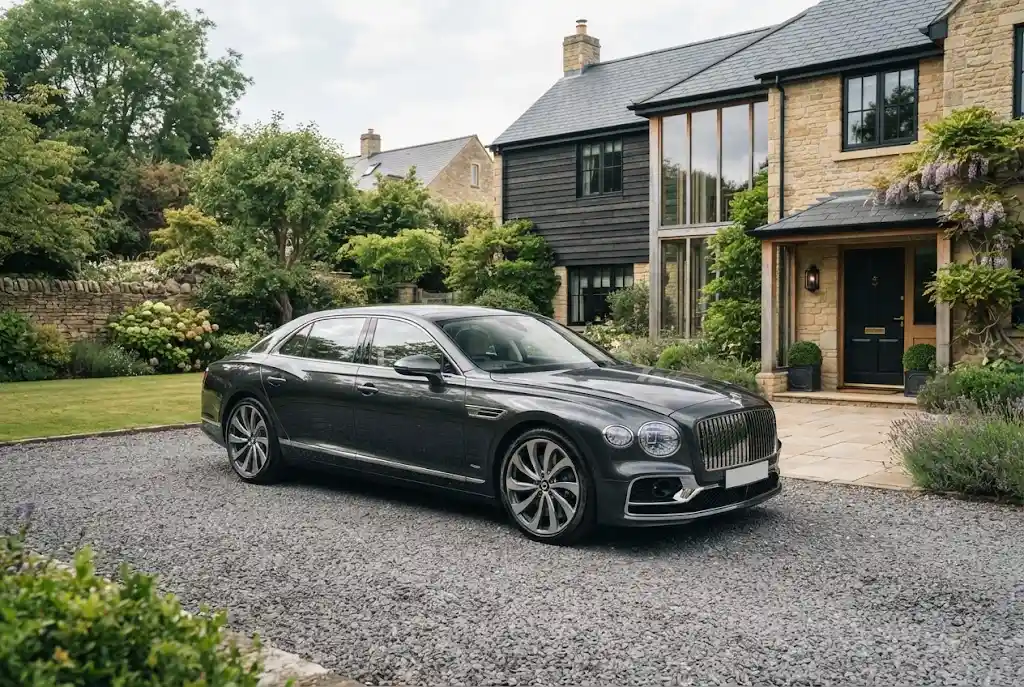
Luxury car insurance is designed for drivers whose vehicles may have higher values, expensive components, powerful engines or specialist repair requirements. While a standard comprehensive policy can sometimes cover an expensive car, specialist or prestige cover may offer a more suitable approach when the vehicle falls outside ordinary insurance assumptions.
Luxury vehicles can include premium saloons, executive cars, high-performance sports cars, prestigious SUVs and limited-production models. However, simply owning an expensive vehicle does not automatically mean you need a specialist policy. The important question is whether the insurance accurately reflects the vehicle’s value, specification and intended use.
This guide explains how luxury and prestige car insurance works, what can affect the premium, and which policy features are worth checking before you buy.
What Is Luxury Car Insurance?
Luxury car insurance is motor insurance intended for high-value, premium or prestige vehicles that may require more specialised underwriting than an ordinary car.
The term can cover a broad range of vehicles. Some luxury cars are expensive because of their brand and specification, while others may have unusually high performance, rare features or substantial customisation.
The exact definition varies between insurers. One provider may accept a particular premium vehicle through a conventional policy, while another may consider it a specialist risk. Therefore, the vehicle’s price alone does not determine whether specialist cover is appropriate.
What matters is whether the policy can properly accommodate the vehicle and provide appropriate protection for the circumstances in which it is used.
Who Needs Luxury Car Insurance?
Owners of expensive or prestige vehicles may want to investigate specialist cover when their car has characteristics that make conventional insurance less suitable.
This can include:
- High-value luxury vehicles
- Prestige executive cars
- High-performance sports cars
- Rare or limited-production models
- Luxury SUVs
- Vehicles with expensive optional equipment
- Heavily customised premium vehicles
- Cars with unusual specifications
However, there is no universal threshold at which a car automatically requires specialist insurance. Some mainstream insurers are comfortable covering relatively expensive vehicles, while specialist providers may be better suited to particularly high-value or unusual examples.
If you are unsure whether your circumstances require specialist underwriting, our guide to who needs specialist car insurance explains the broader eligibility considerations.
Luxury Car Insurance vs Standard Car Insurance
The main difference is not necessarily the level of cover. Both standard and specialist policies can provide comprehensive protection. The difference is often how the insurer assesses the vehicle and the specific terms available.
A luxury vehicle may have a higher replacement cost, more expensive parts or specialist repair requirements. It may also require a more careful approach to valuation.
For example, two five-year-old cars may have very different market values. A standard family car might be relatively straightforward to value, whereas a rare luxury model with a particular specification could have a much narrower market.
This makes the valuation method especially important when comparing policies.
Prestige Car Insurance and Vehicle Valuation
Prestige car insurance should be assessed carefully when it comes to valuation. A high-value vehicle can have significant differences in specification, optional equipment, condition and market demand.
Depending on the policy, an insurer may use market value or another valuation method. Some specialist policies may offer agreed-value arrangements subject to their own requirements.
Before choosing cover, find out:
- How the vehicle’s value is established
- Whether optional equipment is included
- How modifications are treated
- What happens after a total loss
- Whether an agreed value is available
- What evidence is needed to support the valuation
Keep purchase documents, photographs, receipts and records of significant work. These may be useful when establishing the vehicle’s condition and value.
What Affects Luxury Car Insurance Cost?
The cost of luxury car insurance depends on the individual risk rather than simply the vehicle’s purchase price.
Insurers may consider:
- Vehicle make and model
- Current vehicle value
- Engine size and performance
- Driver age and experience
- Claims history
- Driving convictions where relevant
- Annual mileage
- Vehicle storage
- Security arrangements
- Intended use
- Policy excess
- Vehicle modifications
Luxury cars can cost more to insure because the financial impact of theft, damage or total loss can be greater. Repairs may also involve expensive components or specialist expertise.
For a detailed explanation of the wider pricing factors, see our guide to specialist car insurance cost.
Why Can Luxury Car Insurance Be More Expensive?
One reason luxury car insurance can cost more is the potential value of a claim.
A high-value vehicle can require expensive replacement parts, advanced electronic systems and specialist repair work. If the vehicle is stolen or declared a total loss, the financial exposure can also be significantly greater.
Performance can be another consideration. A powerful vehicle may be assessed differently from a lower-powered car because of its performance characteristics and the potential risk associated with it.
Theft risk can also influence premiums. Certain premium vehicles may be attractive targets, so insurers can take security and storage arrangements into account.
That said, an expensive car does not automatically receive an expensive premium. The driver’s profile, mileage, location, security and many other factors are relevant.
High Value Car Insurance: What Should You Check?
High value car insurance requires careful attention to the policy details because the financial consequences of a claim can be substantial.
Check how the policy handles:
Total Loss Claims
Understand how the insurer calculates the vehicle’s value if it is written off. Do not assume that the amount you paid for the vehicle is automatically the amount payable after a claim.
Repairs
Find out whether the insurer uses approved repairers and whether you have any choice regarding where specialist repairs are completed.
Replacement Parts
Luxury vehicles can use expensive or specialised components. Check the policy’s approach to replacement parts and repair costs.
Security
Ask whether specific security arrangements are required. High-value vehicles may have particular security expectations depending on the insurer.
Excess
Check both compulsory and voluntary excesses. A low premium may come with a substantial excess, which can affect the overall value of the policy.
Executive Car Insurance for Premium Daily Vehicles
Executive car insurance can be relevant to premium vehicles used regularly for commuting, business travel or general private driving.
An executive vehicle may not be a rare supercar, but it can still have a high purchase price, powerful engine, expensive technology and premium repair costs.
The important issue is therefore not whether a vehicle looks like a traditional luxury car. Instead, consider its value, specification, use and the level of insurance available for it.
Drivers who use a premium vehicle for business should also make sure the policy permits the required type of business use. Social and commuting cover is not necessarily equivalent to cover for all business purposes.
Premium Vehicle Insurance and Mileage
Annual mileage can have an important role in premium vehicle insurance. A luxury car used only occasionally can present a different exposure to risk from one used for daily commuting and long-distance business travel.
Some specialist policies may offer mileage arrangements suited to lower-use vehicles. If a policy includes a mileage restriction, make sure it reflects your genuine driving needs.
Do not underestimate your mileage simply to obtain a cheaper quotation. Providing accurate information is essential when arranging insurance.
Does Storage Affect Luxury Car Insurance?
Where a luxury vehicle is kept overnight can be relevant to the insurer’s assessment.
A secure private garage can provide different circumstances from street parking, particularly for a high-value vehicle. Depending on the insurer, security systems, gates, tracking devices or other measures may also be relevant.
Any security requirements should be confirmed with the insurer. Do not assume that installing a particular security device automatically guarantees a discount.
Luxury Car Insurance for Modified Vehicles
A luxury vehicle can become more complicated to insure when it has been substantially modified.
Changes to engine performance, suspension, exhausts, wheels, bodywork or other components can affect risk and value. Custom interiors and expensive aftermarket equipment may also need to be declared.
When obtaining a quotation, provide complete details of relevant modifications. A policy that covers the original vehicle does not necessarily provide automatic protection for significant aftermarket changes.
Owners of heavily modified premium vehicles may benefit from comparing specialist car insurance providers that are experienced in unusual specifications.
Can You Get Temporary Luxury Car Insurance?
Yes, temporary cover may be available for some luxury vehicles, although eligibility depends on the insurer and the particular car.
Short-term cover can be useful when you need to drive a premium vehicle for a limited period, such as after purchasing it or borrowing it temporarily.
However, high-value vehicles can have stricter eligibility criteria than ordinary cars. If you need cover for only a short period, read our guide to temporary specialist car insurance before choosing a policy.
What Level of Cover Should You Choose?
Luxury vehicle owners should consider the actual protection they require rather than selecting a policy based only on the premium.
Comprehensive cover may provide broader protection than lower levels of motor insurance, but the precise protection depends on the policy wording.
Check the exclusions, excess, valuation method, permitted use and claims arrangements. A comprehensive label does not mean that every possible risk is automatically covered.
For a high-value vehicle, policy exclusions can have a particularly significant financial impact. Take time to understand them before purchasing.
How to Compare Luxury Car Insurance Quotes
When comparing quotations, use consistent information for every provider. This includes the vehicle specification, value, mileage, usage, storage and driver details.
Then compare more than the headline premium.
- Check the valuation method.
- Compare compulsory and voluntary excesses.
- Review mileage restrictions.
- Check permitted use.
- Confirm modification cover.
- Review exclusions.
- Understand repair arrangements.
- Check security requirements.
- Review optional benefits and limits.
Two policies can have similar prices but provide materially different protection. A proper comparison should therefore focus on the overall quality and suitability of the cover.
How to Find Affordable Luxury Car Insurance
Finding a suitable premium does not necessarily mean reducing the level of protection. Several factors can potentially help make cover more competitive.
Compare multiple suitable providers rather than relying on a single quotation. If the vehicle is genuinely low-mileage, provide an accurate mileage estimate. Consider appropriate security arrangements and choose a voluntary excess only if you can comfortably afford it.
It is also important to make sure your information is accurate. Incorrect vehicle values, mileage or modification details can lead to inappropriate quotations and potentially create difficulties later.
What Documents May Be Useful?
Luxury vehicle owners should keep useful documentation together. Depending on the insurer, this can include:
- Purchase invoices
- Vehicle photographs
- Service records
- Modification invoices
- Valuation documents
- Security system information
- Records of specialist work
Keeping records up to date can make it easier to demonstrate the vehicle’s specification and condition when required.
Is Specialist Luxury Car Insurance Worth It?
Specialist cover can be worthwhile when the vehicle has characteristics that require a more tailored approach. A rare, heavily modified or particularly valuable car may benefit from underwriting that understands its specific risks.
However, not every premium vehicle requires specialist insurance. Some luxury cars can be insured through mainstream providers if the policy accurately reflects the vehicle and its use.
The best approach is to compare suitable policies and examine the terms carefully. The fact that an insurer calls a product “specialist” does not automatically make it better.
Final Thoughts on Luxury Car Insurance
Luxury car insurance is ultimately about matching the policy to the vehicle and the way it is used. High-value, prestige and executive cars can have different repair costs, valuations, security considerations and usage patterns from ordinary vehicles.
Before choosing cover, consider the vehicle’s value, specification, modifications, mileage, storage and intended use. Then compare providers based on the complete policy rather than the premium alone.
If your vehicle is unusual or difficult to insure through a conventional route, specialist providers may offer more appropriate options. If you are still assessing whether specialist cover is necessary, start with our guide to who needs specialist car insurance.
The right policy should give you confidence that your luxury or prestige vehicle has been assessed properly and that the cover reflects its real-world value and use.
