

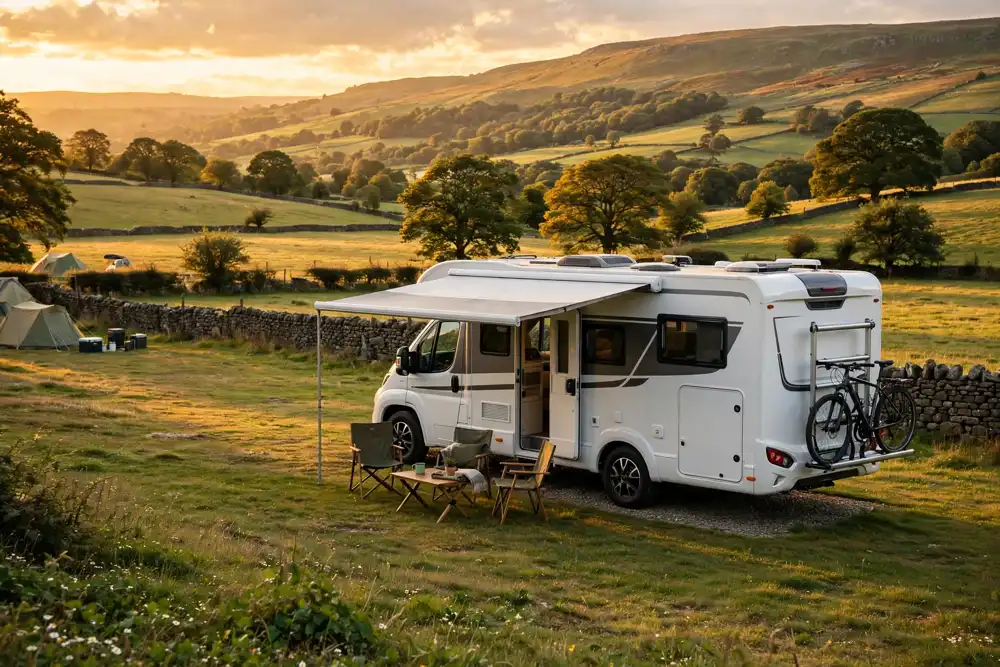
Motorhome insurance is the cover that protects a motorhome, its habitation area and the people travelling in it. A motorhome is not just a large car: it is a vehicle and a living space combined, with a kitchen, beds, water systems and personal belongings on board. That combination is why motorhome insurance is a specialist product, with features that ordinary car policies do not include. Whether you own a compact campervan conversion or a large coachbuilt motorhome, the right policy protects the vehicle, the living area and your trip.
This guide explains how motorhome insurance works in the UK, what cover to look for, and how to compare policies for the way you actually use your motorhome.
How Motorhome Insurance Differs from Car Insurance
The most obvious difference is size and weight. Motorhomes are longer, taller and heavier than cars, which affects handling, parking and repair costs. Insurers take the vehicle’s size, weight and value into account, and they will usually ask for the exact model, year and conversion type. A panel van conversion, a coachbuilt motorhome and an A-class motorhome are different risks, even when they are based on similar chassis.
The second difference is the habitation area. A motorhome contains furniture, appliances, bedding and personal possessions, and a good policy covers those contents as well as the vehicle itself. Habitation cover can include the fitted kitchen and bathroom equipment, as well as personal belongings carried on a trip, although limits apply and high-value items may need to be declared separately. Windscreen and window cover also matters more than it does for a car, because a motorhome has large windows and a big windscreen that are expensive to replace.
The third difference is use. Motorhomes are often used seasonally, stored for months over winter, and taken abroad for extended touring. Policies reflect that pattern with features such as laid-up cover for storage periods and European cover for touring. If you use your motorhome as your only vehicle, or you live in it full-time, that changes the risk again, and you need a policy that explicitly covers that use rather than assuming leisure-only cover applies.
Levels of Cover Explained
As with car insurance, motorhome policies are usually offered at three levels. Comprehensive cover is the widest: it covers damage to your own motorhome as well as third-party claims, and it usually includes fire, theft, windscreen and personal belongings cover. Third party, fire and theft covers third-party claims plus fire and theft damage to your own vehicle, but not accidental damage. Third party only covers claims from others and nothing for your own vehicle.
For most motorhome owners, comprehensive cover makes sense, because the vehicle itself is valuable and repair costs can be high. If you are unsure what comprehensive means in practice, our guide to fully comprehensive car insurance explains the cover level in detail. The same principles apply to motorhomes, with the addition of habitation and contents cover on top.
New-for-old replacement is a feature worth asking about if your motorhome is new. Some policies replace a motorhome written off within its first year or two with a new equivalent, rather than settling on a depreciated value. Agreed value is another option on some specialist policies, where the value is settled in advance. Both features give certainty, but they are not standard on every policy, so check whether they are included or available as an addition.
Full-Time Use, Touring and Storage
How you use your motorhome is one of the first things an insurer will ask about. Leisure use, where the motorhome is used for holidays and weekends and stored at home between trips, is the most common pattern and the simplest to cover. Full-time use, where the motorhome is your main residence, needs a specialist policy, because the risk profile is different: the vehicle is occupied more, it carries more belongings, and it may be parked in more varied locations.
European touring is another key question. Many UK motorhome policies include a period of European cover as standard, but the number of days and the countries covered vary. If you plan a long tour, check the limit before you leave, and ask about extending it if needed. Breakdown cover is also worth considering separately, since recovering a large motorhome is more complex than recovering a car, and a policy that includes onward travel or alternative accommodation can make a real difference if something goes wrong far from home.
Storage is equally important. Insurers will ask where the motorhome is kept when it is not in use, and what security is in place. A driveway, a locked garage, or a secure storage site are all common answers, and each carries different conditions. Some policies require a steering lock, wheel clamp or alarm, particularly for higher-value vehicles. Be accurate about storage, because a claim can be affected if the vehicle was kept somewhere different from the arrangement you declared.
When the motorhome is not in use for a long period, laid-up cover can protect it against fire and theft without paying for road risks. This is a useful option for seasonal owners, and it sits alongside the legal requirement to insure a vehicle kept on a public road. Our guide to when your vehicle must have insurance explains when cover is legally required and when a formal off-road declaration applies.
What Affects the Cost of Motorhome Insurance?
Several factors shape a motorhome quote. The vehicle’s value, size and age matter, as does your driving history, your location, and where the motorhome is stored. Security devices help, as does a clean driving record. Annual mileage matters too: a motorhome used for a few thousand miles a year is a different risk from one driven daily.
It also helps to understand the wider insurance market when comparing quotes. Our guide to the best specialist car insurance explains how specialist providers approach unusual vehicles, and the principles apply to motorhomes too. If you sometimes hire a vehicle instead of using your own, our guide to rental car insurance and our guide to how much rental car insurance costs cover that side of things. For short periods of extra cover, our guide to temporary specialist car insurance explains how short-term policies work.
One practical tip is to keep your documentation in order. Service history, habitation service records, and receipts for security devices or upgrades all support your application and any future claim. If you add a solar panel, an awning, or a new appliance, tell your insurer, since fitted equipment forms part of the vehicle’s value and cover.
Choosing the Right Motorhome Policy
Start by writing down how you use your motorhome: how many miles a year, how many trips, whether you travel in Europe, where it is stored, and who drives it. Then compare policies on the features that matter for that pattern: habitation and contents limits, European cover days, breakdown cover, windscreen cover, and whether full-time use is included if you need it. Check the excess, and check for exclusions around awnings, roof boxes and towed vehicles if you carry them.
Compare like with like. A policy that looks cheaper but excludes habitation contents or limits European cover to a short period may not suit a touring owner. A policy with a higher excess may suit an owner who rarely claims, but it raises the amount you pay if something happens. Read the wording on theft and storage conditions carefully, since motorhomes are attractive targets and insurers set clear expectations about locks, alarms and storage sites.
Finally, review your policy each year rather than renewing automatically. Your mileage, storage or travel plans may have changed, and the market moves too. A short review at renewal, with your usage and any new equipment declared, keeps the cover matched to the motorhome as it is now, which is what matters when you need to make a claim.
Frequently Asked Questions
Is motorhome insurance different from campervan insurance? The two overlap, but insurers distinguish by vehicle type and conversion. A campervan conversion is usually smaller and may be covered under a campervan policy, while larger coachbuilt and A-class vehicles need dedicated motorhome cover.
Does motorhome insurance cover personal belongings? Most comprehensive motorhome policies include a contents limit for personal belongings and fitted habitation equipment, but limits vary, so check the figure and declare high-value items separately if needed.
Can I get cover for full-time living in my motorhome? Yes, but you need a policy that explicitly covers full-time use. Standard leisure policies usually do not, so ask before you buy.
Am I covered to drive in Europe? Many policies include European cover for a set number of days. Check the duration and the countries included before a long tour.
What if my motorhome is stored over winter? Laid-up cover can protect against fire and theft while the vehicle is not in use. Make sure the storage location and security match what you declared, and remember that insurance for motorhomes still needs to reflect the legal position if the vehicle is kept on a public road.
