

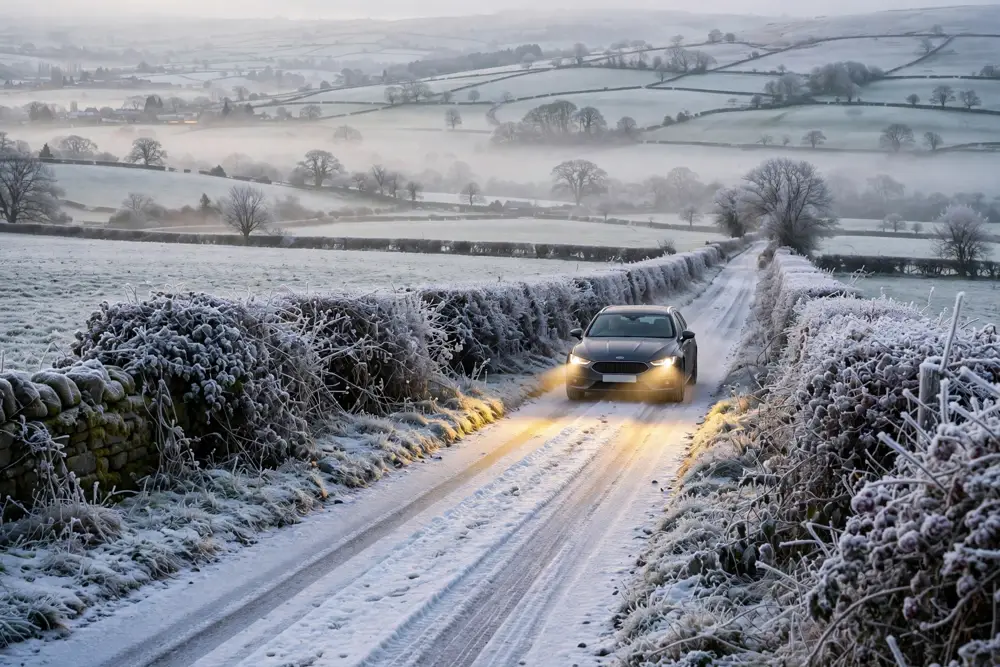
Shorter days, icy mornings and unpredictable weather make winter the most demanding season for UK motorists. The good news is that a little preparation goes a long way: most winter accidents happen not because conditions are impossible, but because drivers and cars are caught unprepared. These winter driving tips will help you get your car ready, adjust your driving for ice, snow and fog, and deal calmly with the situations the season throws at you — so you can reach every destination safely and protect your insurance record at the same time.
Prepare Your Car Before the Cold Weather Arrives
Winter readiness starts long before the first frost. Check your tyres first: the legal minimum tread depth is 1.6mm, but grip on wet and icy roads improves noticeably with 3mm or more, and correctly inflated tyres handle far better in the cold. If you regularly drive in rural or hilly areas, consider winter tyres, which use a softer compound that stays flexible at low temperatures. Next, have your battery tested — flat batteries are the number one cause of winter breakdowns, and a battery over five years old is living on borrowed time. Top up antifreeze and screenwash rated for sub-zero temperatures, check every light bulb, and replace worn wiper blades before they start smearing. Our UK checklist for preparing your car for a long drive covers the full routine and is just as useful before winter sets in.
Adjust Your Driving for Ice, Snow and Fog
The single most important winter adjustment is space. Stopping distances can be ten times longer on ice and snow than on a dry road, so leave a much bigger gap to the vehicle in front and reduce your speed well before bends, junctions and downhill stretches. Use the highest gear you can when pulling away on slippery surfaces to avoid wheelspin, brake gently and early, and steer smoothly — sudden inputs are what break traction. In fog, use fog lights when visibility drops below 100 metres, but switch them off when it clears so you do not dazzle other drivers. Many of these habits are the same ones covered in our defensive driving tips, and winter is when they matter most: anticipation is your best safety feature.
Plan Your Journey and Pack a Winter Essentials Kit
Check the weather forecast and traffic reports before you set off, and be willing to delay or abandon a journey in genuinely severe conditions — no appointment is worth the risk. Tell someone your route and expected arrival time on longer trips, keep your fuel tank or battery charge topped up so you can keep the heater running if you are stranded, and make sure your phone is charged. Keep a winter kit in the boot: an ice scraper and de-icer, a torch, a high-visibility jacket, warm clothing and a blanket, a bottle of water and snacks, a phone power bank, and a small shovel and piece of old carpet or cat litter for grip if you get stuck in snow. It is also worth keeping your insurer and breakdown provider’s numbers saved in your phone; if you are ever unsure whether a car you are borrowing is covered, you can check if a car is insured before you drive it.
Staying Legal and Insured Through Winter
Winter brings some legal duties drivers forget. You must clear all snow and ice from your windscreen, windows, lights and number plates before driving — peering through a small cleared patch is an offence and genuinely dangerous — and driving with snow sliding off your roof onto other road users can land you in trouble too. Understanding how car insurance works in the UK helps here: if you have an accident because you set off with an obscured windscreen, your insurer may argue you were driving carelessly. There is a financial angle as well as a safety one. A winter claim can cost you your discount, so it pays to understand how your no claims bonus builds and what a single claim does to it. Careful winter driving protects both your safety and your renewal price.
What to Do If You Skid or Break Down
If the back of the car slides, steer gently into the skid — towards the direction the rear wheels are going — and avoid stamping on the brakes, which usually makes things worse. If you break down, pull as far off the carriageway as you can, switch on your hazard lights (and side lights if it is dark or foggy), and get everyone out of the car from the side away from traffic to wait behind a barrier where there is one. On a motorway, never stay in the vehicle on the hard shoulder. Call your breakdown provider or insurer from a safe place, and if you are travelling further afield this season, our guide to winter travel insurance explains the cover worth arranging before you go.
Winter driving will never be the easiest driving of the year, but with a prepared car, a calmer right foot and a boot stocked with the essentials, it becomes far less stressful. Slow down, look further ahead, and give yourself time — arriving a few minutes later is always better than not arriving at all.
Winter Driving and Your Insurance Record
Every winter journey is also a chance to protect your future premiums. Even a minor prang can mean paying your excess and losing some of your no claims discount, which is why the safest winter drivers treat every trip as an investment in next year’s renewal price. If you do have a bump, report it to your insurer promptly even if you decide not to claim — most policies require you to declare any incident. And if you share driving duties over the festive season, make sure anyone who gets behind the wheel of your car is properly covered as a named driver before they set off, not after something goes wrong.
Allow Extra Time and Drive to the Conditions
Finally, build slack into every winter journey. Set off ten minutes earlier than you think you need to, so you are never tempted to make up time on a slippery road. Slow down in stages rather than braking late, keep both hands on the wheel in crosswinds on exposed stretches, and remember that bridges, shaded lanes and quiet country roads freeze first and thaw last. If conditions turn truly severe while you are out, the bravest decision is often to stop somewhere safe and wait — the road will still be there when the weather eases.
