

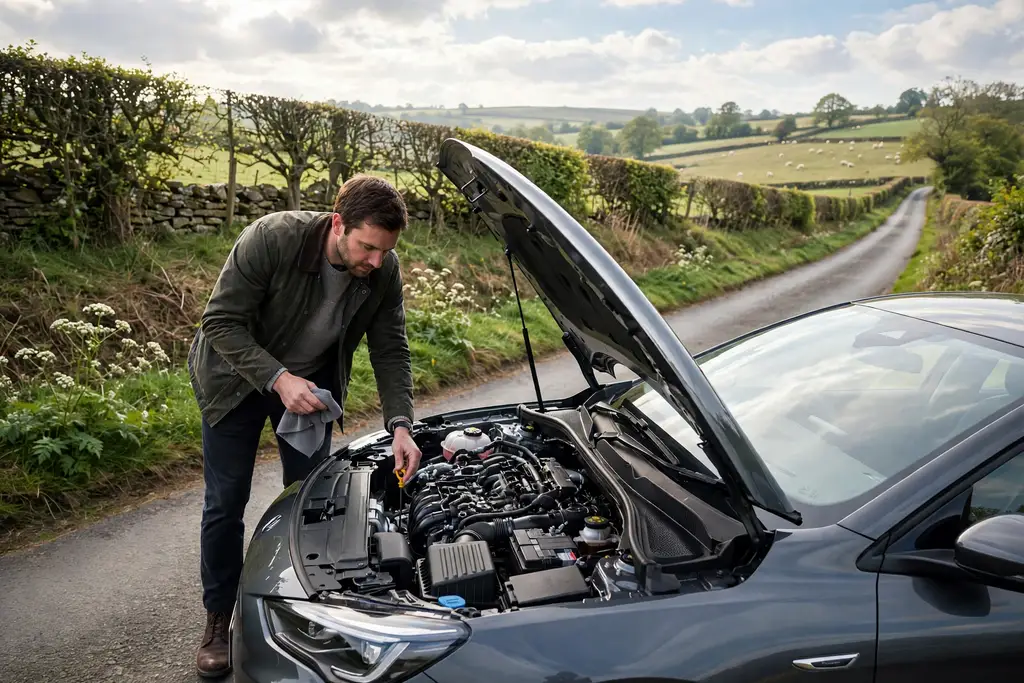
A long drive puts demands on your car that short trips never do. Hours at motorway speed, a full load of passengers and luggage, and no easy place to stop if something goes wrong. Taking half an hour to prepare your car for a long drive is the simplest way to avoid a breakdown, a fine or a ruined trip. This checklist covers the checks that matter most, in the order a mechanic would do them, plus the documents and driver preparation that are easy to forget.
Check Your Tyres First
Tyres are the only part of the car touching the road, and they work hardest on long journeys. Check the pressure in all four tyres, and the spare if you have one, against the figures in the handbook or on the driver’s door sticker. A fully loaded car usually needs the higher pressure setting shown for heavy loads. Under-inflated tyres overheat at motorway speed, use more fuel and wear unevenly. While you are there, check tread depth: the legal minimum in the UK is 1.6mm, but grip in heavy rain falls away well before that, so treat 3mm as a sensible replacement point before a long trip. Run your hand over the sidewalls for bulges or cracks, and make sure the wheel nuts are tight if wheels have been off recently.
Top Up Fluids and Check the Oil
Open the bonnet once the engine is cold. The oil level should sit between the minimum and maximum marks on the dipstick; long motorway runs burn a little oil in older engines, so top up with the correct grade if it is low. Check the coolant level in the expansion tank, never by opening a hot radiator cap, and top up with the right coolant mix if needed. Screenwash is the fluid drivers forget most: a long drive in bad weather can empty a reservoir, and driving with a smeared windscreen is both dangerous and an offence if your washers do not work. Brake fluid and power steering fluid reservoirs have minimum marks too; if either is low, have the car looked at rather than just topping up, because falling levels can signal wear or a leak.
Test Lights, Wipers and the Battery
Walk around the car and test every light: headlights on both beams, indicators, brake lights, fog lights and the number plate light. A blown bulb is a small thing at home and a big problem on a dark motorway. Check the wiper blades for splits and juddering, and replace them if they smear. Batteries fail most often after a period of strain, and long drives usually follow weeks of short trips that never fully recharge them. If the engine has been turning over slowly, get the battery tested before you go; most tyre and exhaust centres will test one free. Knowing how car insurance works in the UK also helps you confirm your cover is in force before you set off, not after something happens.
Plan for a Breakdown Before It Happens
Even a well-prepared car can break down, so carry the kit that turns a crisis into an inconvenience: a charged phone, a warning triangle, a high-vis vest, a torch, basic tools, jump leads or a portable booster pack, and water for both the car and the passengers. Check whether your policy includes breakdown cover or whether you hold it separately, and save the number in your phone. If you are driving someone else’s car or a hire car, confirm the insurance position before the trip rather than assuming you are covered; our guide to third party car insurance explains the minimum cover and its limits.
Load the Car Safely
How you load matters more than people think. Heavy items go low and against the back seats in the boot, never loose on the parcel shelf where they become projectiles in a sudden stop. Keep the rear window clear, secure roof box loads within the weight limit in the handbook, and remember that a fully loaded car handles and brakes differently, especially in crosswinds. Recheck tyre pressures after loading if you are carrying a full complement of passengers and luggage. Inside the cabin, keep essentials within reach so the driver is never rummaging: water, snacks, phone charger and any medication.
Prepare the Driver, Not Just the Car
Most long-drive accidents involve tiredness rather than mechanical failure. Plan a break of at least fifteen minutes every two hours, share the driving if you can, and avoid starting a long journey at the end of a working day. Our defensive driving tips cover how to read the road ahead and protect your licence and your no claims record on busy routes. Speaking of which, a fault claim on a long trip can cost you years of discount, which is why it is worth knowing whether no claims bonus expires and how a single incident affects it. If the worst does happen and the accident was not your fault, our guide to whether a non-fault accident affects your insurance explains what to expect at renewal.
Fuel, Stops and Route Planning
Check the route the night before, including any roadworks or closures on motorways you plan to use, and identify fuel or charging stops in advance rather than running the tank low in an unfamiliar area. Electric car drivers should plan around reliable chargers with a backup option, because a single out-of-service charger can add an hour. Share your route and expected arrival time with someone at your destination, keep the sat nav updated, and build in slack: a journey planned with no margin turns every hold-up into stress, and stressed drivers make mistakes in the final hour of a long drive.
The Night-Before Summary
The evening before you travel, do a final five-minute pass: fuel or charge level, tyre pressures set for the load, fluids topped up, lights and wipers working, warning kit in the boot, documents and breakdown number in the car, route and breaks planned. Prepare your car for a long drive with those checks and the journey becomes the relaxing part of the trip it should be, rather than the part you worry about.
