

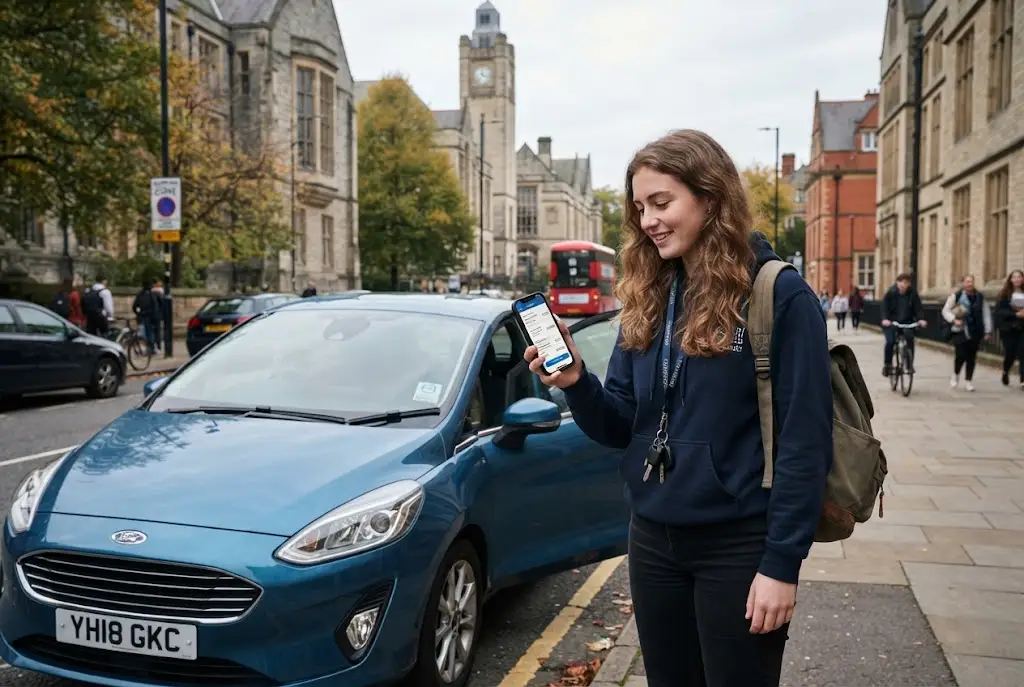
How much is student car insurance is one of the most common questions asked by young drivers preparing for university or college. Unfortunately, there is no single price that applies to every student. Insurance premiums are calculated using multiple risk factors, including age, driving experience, vehicle, location, mileage, claims history and where the car is normally kept.
Young drivers can face particularly high premiums because insurers generally consider them more likely to make a claim than older, more experienced motorists. The Association of British Insurers (ABI) explains that drivers aged 17 to 24 represent 7% of UK licence holders but are involved in 24% of fatal collisions. This helps explain why insurance for younger drivers can be considerably more expensive.
If you are budgeting for university, understanding what influences the price can help you make better decisions before buying a car or arranging cover. This guide explains student car insurance costs, why prices can be high, what can affect your quote and how to approach the search for suitable cover.
How Much Is Student Car Insurance?
There is no reliable fixed student car insurance cost because insurers calculate premiums for individual drivers and vehicles. Two students of the same age can receive very different quotes even if they live in the same city.
The ABI states that insurers use a wide range of rating factors when setting motor insurance prices. These include age, occupation, claims history, local accident and vehicle-crime levels, vehicle type, where the vehicle is stored overnight and whether it has security features such as an alarm or immobiliser.
That means an online article cannot accurately promise an “average student price” for every driver. A more useful approach is to understand the factors that influence your individual quote.
Why Is Student Insurance Expensive?
Why is student insurance expensive? The biggest reason is usually the risk associated with being young and relatively inexperienced behind the wheel.
Insurers price cover according to risk. Where statistical evidence indicates that a particular group is more likely to make a claim, the cost of covering that risk can be higher. The ABI says young drivers are more likely to be involved in accidents and more likely to make a claim than drivers aged 25 and older.
This does not mean that every young student is considered an unsafe driver. Insurance pricing works at a population level as well as considering individual circumstances. A careful student can still receive a high quote because age and limited driving experience remain relevant rating factors.
What Affects Student Car Insurance Cost?
Several factors can influence the price you are quoted. Understanding these factors can help you compare policies more intelligently.
Age and Driving Experience
Age is an important factor in motor insurance pricing, particularly for young drivers. Students who have only recently passed their test generally have less driving experience than someone who has held a licence for many years.
The ABI’s current guidance explains that age can materially influence both the likelihood of making a claim and the cost of claims when they occur. Its data also shows a clear relationship between premiums, claims frequency and claim costs across age groups.
As you gain experience and build a claim-free driving record, your insurance position may improve over time. However, there is no guaranteed age at which premiums suddenly become cheap.
The Car You Drive
The vehicle can have a major effect on your insurance price. A powerful or expensive car can be more costly to repair or replace, and insurers may consider its performance and claim history when assessing risk.
If you are buying your first student car, it is therefore sensible to check insurance prices before committing to the vehicle. A car with a low purchase price can still have relatively expensive insurance.
The ABI recommends researching insurance groups and choosing a vehicle that is cheaper to insure where possible. It also notes that larger engine sizes and higher vehicle values can contribute to higher insurance costs.
Where You Live
Your location can also influence your premium. Insurers may consider local accident levels, vehicle crime and other characteristics of the area.
This becomes particularly relevant for university students. Moving away from the family home can change the address associated with the policy, where the car is normally parked and how the vehicle is used.
If you take your car to university, provide accurate information about where it will normally be kept. Do not use a family address simply because it produces a cheaper quote if the car is actually kept elsewhere.
Where You Park
The location where your car is stored overnight can form part of an insurer’s risk assessment. A private driveway, garage, university car park and public street can represent different circumstances.
The ABI lists where the vehicle is stored at night as one of the factors insurers may use when calculating premiums. It also notes that additional security features may help reduce costs in some circumstances.
Always provide accurate information about your normal parking arrangements.
Annual Mileage
How much you expect to drive can also affect the price of your policy. A student who only drives occasionally may have a different risk profile from someone who commutes to university every day and regularly travels hundreds of miles to visit family.
Give a realistic mileage estimate when requesting a quote. Deliberately underestimating your mileage simply to obtain a lower premium can create problems if the information is inaccurate.
Claims and Driving History
Your previous driving history can affect your premium. Accidents, claims and driving convictions can all be relevant to how an insurer assesses risk.
Students who maintain a clean driving record can potentially build a no-claims discount over time, depending on the insurer and policy. This is one reason responsible driving can have a long-term financial benefit as well as improving road safety.
Does Being a Student Automatically Make Insurance More Expensive?
Not necessarily. Student status is only one part of the overall picture, and insurers consider many other factors.
A university student may be younger, have less driving experience and live in an area with different insurance risks from their previous home. Those factors can combine to produce a higher quote, but it would be misleading to say that simply being enrolled at university automatically causes an expensive premium.
Your occupation or educational status may be requested when obtaining a quote, but the final price reflects the insurer’s assessment of the overall risk rather than one label alone.
Does the Type of Student Matter?
University student car insurance and college student car insurance can involve different circumstances, but there is no universal price difference simply because someone attends university rather than college.
For example, one student might live at home and drive a small car to college several times a week. Another might live in university accommodation, keep the vehicle on campus and use it for long trips during term time.
The insurer is interested in the actual circumstances surrounding the vehicle and driver. That is why accurate information is important when comparing student car insurance.
Can Student Car Insurance Cost More Than the Car?
Yes, it is possible for a young driver’s annual insurance premium to appear surprisingly high compared with the value of the vehicle.
This can seem strange if you are insuring an inexpensive used car. However, the cost of motor insurance is not based solely on repairing or replacing your own vehicle.
An insurer may also face costs associated with damage to other vehicles, property, injuries and other liabilities following an accident. The ABI explains that the premium reflects the overall risk being insured rather than simply the value of the policyholder’s car.
Consequently, buying a very cheap car does not guarantee very cheap insurance.
Does Comprehensive Insurance Cost More?
It is easy to assume that comprehensive insurance will always be more expensive than lower levels of cover. However, you should compare actual quotes rather than making assumptions based on the name of the policy.
Insurance prices depend on the individual risk assessment and policy terms. Third party, third party fire and theft, and comprehensive policies provide different levels of protection, so students should compare what each policy actually covers.
Citizens Advice recommends comparing the cover, exclusions, excesses, discounts, no-claims arrangements and restrictions attached to different policies rather than focusing exclusively on price.
Can a Black Box Reduce Student Car Insurance Cost?
Telematics may be worth considering if conventional quotes are expensive. Student black box insurance uses technology to collect information about vehicle use and driving behaviour.
The ABI explains that telematics policies can use GPS-based technology to assess factors such as mileage, road types, speed and braking patterns. Safe drivers may receive lower premiums, depending on the policy.
However, a black box does not guarantee cheaper insurance. Different providers use different systems and terms, and your traditional risk factors still matter.
If you are considering telematics, read our detailed guide to student black box insurance before choosing a policy.
Can Being on a Parent’s Policy Lower the Cost?
In some circumstances, a student may be able to use a parent’s car as a named driver. This can be appropriate when the parent remains the main driver and the student uses the vehicle occasionally.
However, it is not a legitimate way to reduce insurance costs if the student actually uses the car most of the time.
Putting a parent down as the main driver when a student is really the main user can amount to fronting. The ABI warns that fronting is insurance fraud and can lead to serious consequences, including invalidating the policy.
If you are considering a family arrangement, see our guide to student on parents car insurance for more information.
How Can Students Reduce Insurance Prices?
Although you cannot control every rating factor, there are practical steps that may help you find more affordable cover.
Choose the Car Before the Insurance
When buying a car, investigate its insurance cost before completing the purchase. A modest, suitable vehicle may be easier to insure than a high-performance model.
Compare Multiple Quotes
Insurance prices can vary between providers. The ABI recommends shopping around and checking comparison websites, insurers that sell directly and insurance brokers.
Do not automatically select the cheapest result. Compare the policy terms and excess as well.
Consider the Voluntary Excess
A higher voluntary excess can sometimes reduce your premium. However, you must be able to afford the excess if you make a claim.
The ABI explains that young drivers may already have a compulsory excess and that any voluntary excess is added to it when a claim is made.
Improve Vehicle Security
Appropriate security features such as an immobiliser may help reduce risk. Where possible, secure parking can also be relevant.
Avoid Unnecessary Modifications
Modifications can increase insurance costs, particularly where they affect vehicle performance or value. If you make changes to your vehicle, tell your insurer when required.
Drive Safely
Avoiding accidents, convictions and unnecessary claims can help you build a stronger driving history. Over time, a no-claims discount may help reduce your insurance costs with insurers that offer one.
The ABI identifies safe driving and building a no-claims discount as important ways to help keep insurance costs lower over the long term.
Is Paying Monthly More Expensive?
Students often consider monthly payments because spreading the cost can make a large annual premium easier to manage. However, you should check the total amount payable rather than assuming monthly instalments cost the same as paying annually.
Depending on the insurer and payment arrangement, spreading payments can involve additional costs or interest. Citizens Advice recommends comparing the terms and costs of different insurance arrangements rather than looking only at the headline premium.
When comparing quotes, look for the total amount you will pay over the full policy period.
What Is the Average Student Insurance Price?
Searches for an “average student insurance” figure can be useful for general budgeting, but an average does not tell you what your own policy will cost.
Young drivers can have widely different premiums because insurers consider numerous variables. The ABI’s age data shows substantial differences in average premiums between age groups, while also emphasising that premiums reflect claims frequency and claim costs.
For this reason, students should use real quotes for their specific car and circumstances when planning a budget. An online average should be treated as a broad reference rather than a guaranteed price.
What If Student Insurance Is Too Expensive?
If the quotes you receive are outside your budget, do not respond by giving an insurer inaccurate information. Instead, review the factors you can legitimately change.
Consider whether a different car would be cheaper to insure, whether you genuinely need the same annual mileage, whether a telematics policy is suitable, and whether the policy excess is affordable. You can also compare the cost of a family named-driver arrangement where the student is genuinely not the main driver.
If you are struggling to find suitable cover, Citizens Advice notes that insurers decide whether to offer cover and that specialist brokers can sometimes help people who have difficulty obtaining insurance.
What Should Students Budget For Besides Insurance?
Insurance is only one part of the cost of owning and running a car while studying.
A realistic student motoring budget may also need to account for:
- Fuel or charging costs
- Vehicle tax where applicable
- MOT costs when applicable
- Servicing and routine maintenance
- Tyres and repairs
- Parking fees
- Breakdown cover
- Potential insurance excess after a claim
Looking at the complete cost of motoring can help prevent a situation where a student buys an inexpensive car but discovers that insurance, fuel and maintenance make it difficult to afford.
How Much Is Student Car Insurance Compared With Other Young Drivers?
Students are generally part of the wider young-driver insurance market. The fact that someone is studying does not necessarily make their insurance fundamentally different from that of another young driver with similar circumstances.
Age and driving experience can remain important factors, while the vehicle, location and usage pattern can create further differences.
ABI data confirms that younger drivers tend to face higher premiums because they have higher claims risk.
As a result, students should focus less on finding a universal “student rate” and more on finding a policy appropriate to their own risk profile and budget.
Final Thoughts on Student Car Insurance Cost
How much is student car insurance cannot be answered with one figure that applies to every UK student. Your age, driving experience, vehicle, location, annual mileage, claims history, parking arrangements and other factors can all affect the price.
Young drivers can face higher premiums because insurers generally consider them more likely to make claims. That is why choosing an appropriate car and comparing several policies can make a meaningful difference to your overall motoring budget.
If you are trying to control your student car insurance cost, start by checking quotes before buying a car, compare the whole policy rather than just the premium, consider telematics where appropriate and provide accurate information about your circumstances.
Most importantly, do not compromise the validity of your cover to obtain a cheaper price. Building safe driving experience, maintaining a clean record and making sensible choices about your vehicle can help put you in a stronger position as your insurance history develops.
