

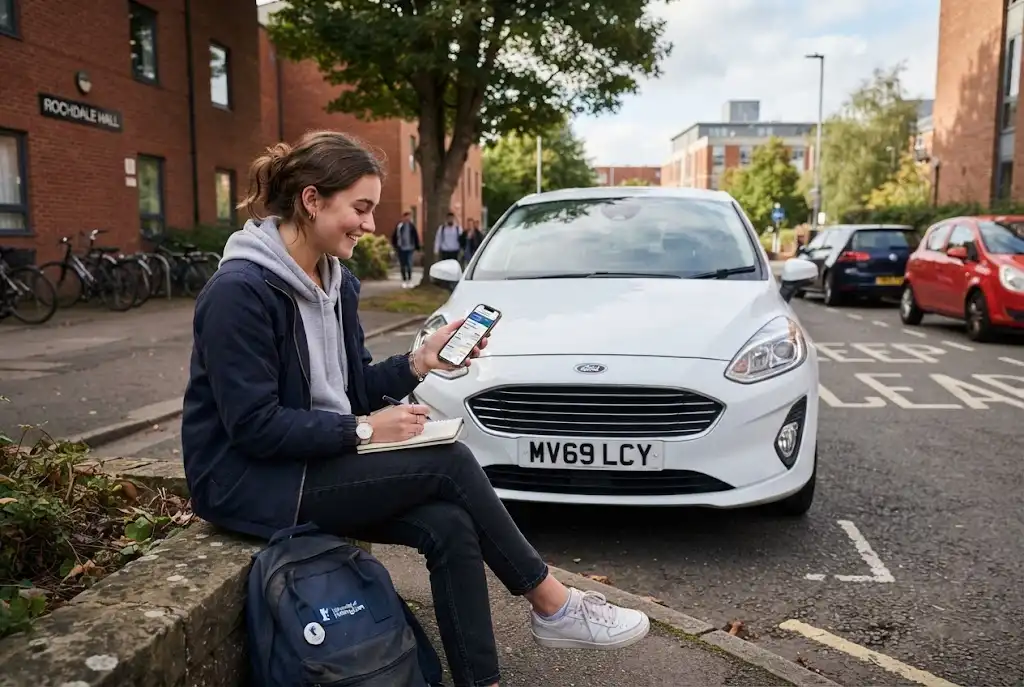
Finding cheap student car insurance can be challenging, particularly if you are a young or newly qualified driver. Students often face higher premiums because insurers consider factors such as age, driving experience, vehicle type, location and claims risk. However, paying less does not have to mean accepting unsuitable cover.
The best approach is to compare policies carefully and understand which factors are influencing your quote. Choosing an appropriate car, giving accurate mileage information, considering telematics and checking the excess can all help you look for more affordable student car insurance. This guide explains practical ways to reduce costs while keeping the cover appropriate for your circumstances.
Why Is Cheap Student Car Insurance Difficult to Find?
Student drivers are often relatively young and have limited driving experience. Insurers use risk information when calculating premiums, and age and driving experience can have a significant effect on the likelihood and potential cost of claims.
The Association of British Insurers explains that drivers aged 17 to 24 make up a relatively small proportion of UK licence holders but are disproportionately represented in fatal collisions. This is one reason young drivers generally face higher insurance costs than more experienced motorists. Student car insurance therefore needs to be assessed in the wider context of young-driver insurance rather than simply student status.
Your student status alone does not determine your premium. Other factors can make a substantial difference, including the car you drive, where it is kept overnight, how much you drive and whether you have previous claims or convictions.
How to Find Cheap Student Car Insurance
There is no guaranteed method of obtaining the lowest possible premium. However, several practical steps can make it easier to find affordable student car insurance that still provides suitable protection.
Compare Multiple Insurance Quotes
One of the simplest ways to search for affordable cover is to compare quotes from different providers. Insurance companies use their own pricing models, so the same student and vehicle can receive different premiums from different insurers.
Price comparison services can make the initial search easier, but they should not be the only source you consider. The ABI recommends shopping around and notes that customers can also approach insurers directly or use an insurance broker. The cheapest quote is not necessarily the best option if it comes with unsuitable cover, restrictive conditions or an excess that you could not comfortably afford.
Choose a Car That Is Cheaper to Insure
The vehicle you choose can have a major effect on your insurance premium. A powerful or expensive car can be more costly to repair or replace, and insurers may consider it a higher risk.
If you are buying your first car as a student, investigate insurance costs before purchasing the vehicle. A car that appears inexpensive to buy may not be inexpensive to insure.
Look at factors such as engine size, vehicle value, repair costs and insurance group. It can be sensible to compare several suitable models rather than choosing a car first and discovering later that the insurance is unaffordable.
Give an Accurate Annual Mileage
Your estimated annual mileage can influence the price of your policy. Students who only drive occasionally may have a different risk profile from those who commute to campus every day or regularly travel long distances between university and home.
Give a realistic estimate rather than deliberately choosing an artificially low figure. If your actual driving changes significantly during the policy period, check with your insurer whether your policy information needs to be updated.
Accuracy matters because providing misleading information simply to reduce a premium can create problems if you later need to make a claim.
Think Carefully About Your Excess
Your excess is the amount you may have to contribute towards a claim. Policies can include a compulsory excess set by the insurer and, in some cases, a voluntary excess selected by the customer.
A higher voluntary excess may reduce the quoted premium, but it also means you could have to pay more if you make a claim. Therefore, do not choose an excess that would be difficult to afford simply because it produces a lower price.
When comparing cheap student car insurance, consider the total financial exposure rather than looking only at the annual premium.
Can a Black Box Reduce Student Insurance Costs?
Telematics is another option worth investigating if your priority is affordable cover. A student black box insurance policy can use technology to monitor aspects of driving and create a driving profile.
Depending on the policy, telematics can consider factors such as speed, braking and other driving characteristics. Some insurers use this information to offer potentially lower premiums to drivers who demonstrate safer driving.
However, telematics is not automatically the cheapest choice for every student. Policies differ, and some may have specific conditions or monitoring requirements. You should understand how the system works before purchasing the policy.
If this option interests you, our dedicated guide to student black box insurance explores telematics insurance in greater detail.
Consider Where You Keep Your Car
Where your vehicle is normally kept can affect an insurance quote. Parking on a private driveway, in a garage, in a university car park or on the street can present different risks from an insurer’s perspective.
Students who move away from home should pay particular attention to this issue. If you take your car to university and its normal parking location changes, make sure the information provided to your insurer remains accurate.
Never state that a vehicle is kept somewhere more secure simply because it produces a cheaper quote. The ABI specifically warns that making false changes to information such as where a car is parked can amount to insurance fraud.
Does Adding an Experienced Driver Make Insurance Cheaper?
Adding an experienced driver to a policy can sometimes affect the premium, but the arrangement must be genuine. An experienced parent or other driver can be added as a named driver when they will actually use the vehicle and are not being falsely presented as the main driver.
What you should never do is put an experienced driver down as the main driver when the student actually uses the vehicle most of the time. This practice is known as fronting.
The ABI states that fronting is a form of insurance fraud. If an insurer discovers that the policy information is false, the policy could be invalidated and there may be serious financial and legal consequences.
For more information about family arrangements, see our guide to student on parents car insurance.
Can a Smaller Engine Help With Student Insurance?
In many cases, choosing a car with a smaller engine can be worth considering when you are trying to reduce insurance costs. Engine size is one of several vehicle characteristics insurers may take into account.
That does not mean that every small-engine vehicle will automatically have cheap insurance. Make, model, age, value, repair costs, security features and other factors can also influence the premium.
The important point is to check insurance costs before buying. If you are comparing two cars with similar purchase prices, the one with the lower insurance cost may be the more affordable option overall.
Avoid Unnecessary Car Modifications
Modifying a vehicle can affect your insurance premium. Changes to performance, appearance or other parts of the car may increase the perceived risk or the potential cost of repair.
If you make any modifications, tell your insurer when required. Failing to disclose relevant changes can cause problems with your policy and potentially affect a future claim.
For students working with a limited budget, keeping a vehicle relatively straightforward can make sense when the goal is to control overall motoring expenses.
Build a No-Claims Record
One of the longer-term ways to improve your insurance position is to drive safely and avoid unnecessary claims. A claim-free driving history can help you build a no-claims discount with insurers that offer such discounts.
This is not an immediate solution for a student looking for a lower premium today. However, responsible driving can become financially valuable over time.
Keeping a clean driving record is also important for reasons that go beyond insurance. Penalty points and accidents can affect future premiums, while safe driving reduces the likelihood of having to deal with a costly claim.
Check Whether Pass Plus Could Help
Some students consider additional driver training after passing their practical test. Pass Plus is a training course designed to help drivers develop their skills in different driving conditions.
Whether completing Pass Plus reduces your insurance premium depends on the insurer. Therefore, do not assume that taking the course will automatically make your policy cheaper. If you are considering it, check whether insurers you are likely to use offer a discount and whether the potential saving justifies the cost of the course.
Cheap Student Car Insurance Does Not Mean the Lowest Price
It is tempting to define cheap student car insurance as the policy with the smallest annual premium. However, the cheapest quote can become expensive if it provides unsuitable protection or leaves you facing a large excess after an accident.
Compare the following features alongside the headline price:
- The level of cover provided
- Compulsory and voluntary excesses
- Policy exclusions
- Annual mileage limits
- Permitted vehicle use
- Breakdown or other optional extras
- Telematics requirements, if applicable
- Rules concerning named drivers
- Cancellation or administration charges
Citizens Advice similarly recommends comparing what policies cover, exclusions, excesses, discounts, no-claims arrangements and restrictions rather than choosing a policy based only on price.
What Students Should Not Do to Reduce Insurance Costs
Trying to save money on insurance should never involve providing inaccurate information. Some shortcuts can create much bigger financial problems later.
Do Not Misrepresent the Main Driver
If you are the person who mainly uses the vehicle, you should normally be declared as the main driver. Do not put a parent or another experienced motorist in that position simply to obtain a lower premium.
Do Not Underestimate Your Mileage Deliberately
Estimating mileage accurately is important. Do not select an unrealistically low annual mileage simply because it reduces the quote.
Do Not Hide Modifications
If your car has modifications that your insurer needs to know about, disclose them. An apparently cheaper policy is not useful if important information has been withheld.
Do Not Ignore a Change of Address
Moving from your family home to university accommodation can change your circumstances. Check your policy requirements if your normal address or parking arrangements change.
Is Affordable Student Car Insurance Possible?
Yes, but affordability depends heavily on the individual student, vehicle and circumstances. There is no single cheapest policy for every university or college student.
The most effective strategy is to control the factors you can reasonably control. Compare several providers, choose a sensible vehicle, provide accurate mileage and address information, consider telematics if appropriate, and review the excess carefully.
You should also think beyond the first year’s premium. Safe driving, avoiding unnecessary claims and building experience can help put you in a stronger position as your driving history develops.
Final Thoughts on Cheap Student Car Insurance
Cheap student car insurance is best approached as a comparison exercise rather than a search for a single magic discount. Students can face higher premiums because they are often younger and less experienced, but careful decisions can help control the overall cost.
Start by comparing suitable policies and consider the vehicle as part of the insurance decision. Give insurers accurate information about mileage, address, parking and vehicle use. If telematics is available, compare its terms with conventional policies. Most importantly, never misrepresent the main driver or other details simply to obtain a lower price.
The goal should be affordable cover that genuinely fits your circumstances. A policy that costs slightly more but provides the protection and conditions you need can be better value than an apparently cheap policy that leaves important gaps.
